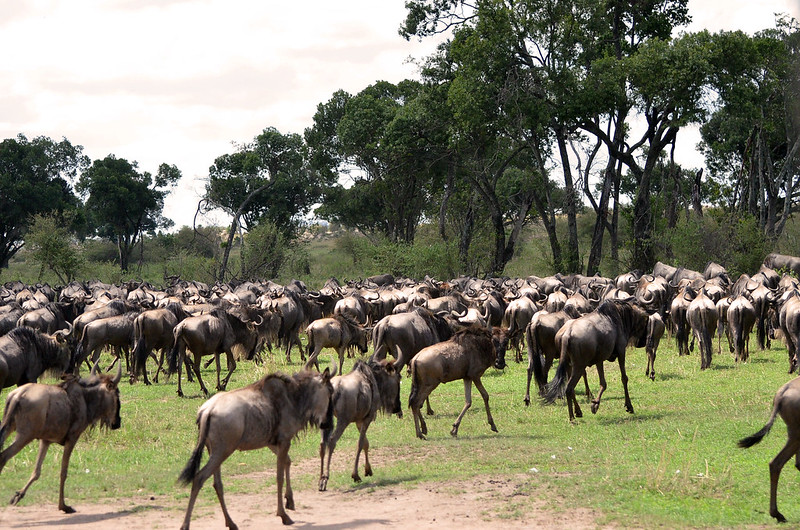
Monthly Wildebeest Migrations Routes
Monthly Wildebeest Migrations Routes: Discover the Serengeti Migration of Wildebeests Seasonal Patterns Throughout the Year: The migration routes of the wildebeest are delineated in both the Masai Mara Game Reserve and Serengeti National Park. The Great Wildebeest Migration, also referred to as The Serengeti The Wildebeest Migration is a remarkable phenomena and ranks among the most exhilarating natural wonders globally. The Wildebeest Migration, with 2 million wildebeests together with thousands of gazelles, zebras, and antelopes, represents the most extensive wildlife migration ever recorded on the planet.
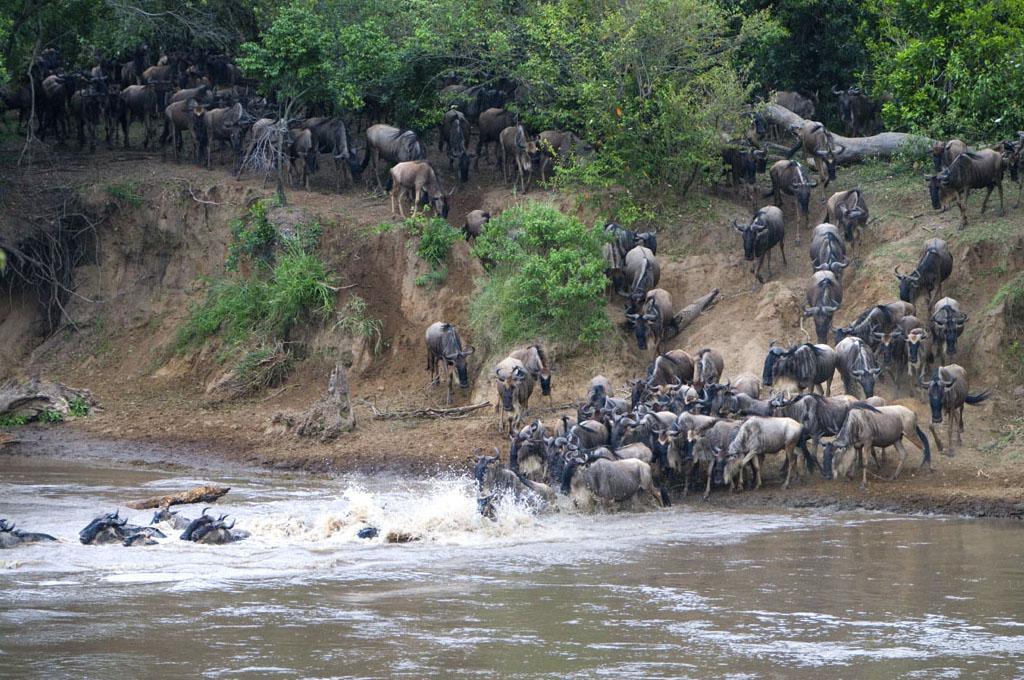
Experiencing the Great Wildebeest Migration is a singular opportunity, allowing travelers to witness this magnificent event firsthand during a safari in Tanzania and Kenya.
This page provides essential information on the monthly cycles of the Serengeti Wildebeest Migration, elucidating the nature of the migration and the optimal time for travel.
What is the Serengeti Wildebeest Migration?
The Serengeti Wildebeest Migration denotes the annual migration of approximately 1.5 million wildebeests, together with thousands of zebras, gazelles, and impalas, through the Mara Serengeti Ecosystem, spanning from the southern Serengeti in Tanzania to the Masai Mara National Reserve in Kenya, in pursuit of grazing and water along a historical path. The migration of wildebeests is initiated by thunderstorms and precipitation.
Experiencing the Great Wildebeest Migration is a paramount objective for enthusiasts of African safaris, suitable for both novice and seasoned travelers.
Seasonally, optimal sites inside Serengeti National Park and Masai Mara National Reserve exist for experiencing the extraordinary wildebeest migration.
This book outlines the monthly cycles of the Serengeti Wildebeest Migration, expectations for a wildebeest safari holiday, and the optimal accommodations to enhance your experience.
Monthly Analysis of The Great Wildebeest Migration
The Great Wildebeest Migration is a year-round event influenced by rainfall, characterized by the herds’ continuous clockwise movement across the Serengeti National Park and Masai Mara National Reserve.
Between December and April, wildebeest herds are often located in the Ndutu plains of the Southern Serengeti, with the calving season occurring in late January to early February.
Upon the onset of the long rains in April and May, the herds migrate towards the Serengeti’s Western Corridor, where the wildebeest encounter treacherous water currents and predators while attempting to traverse the Grumeti River, continuing their trip northward to the verdant grasslands of the Masai Mara National Reserve.
The herd arrives at its destination and stays in the Masai Mara National Reserve for almost three months before returning to Tanzania in November.
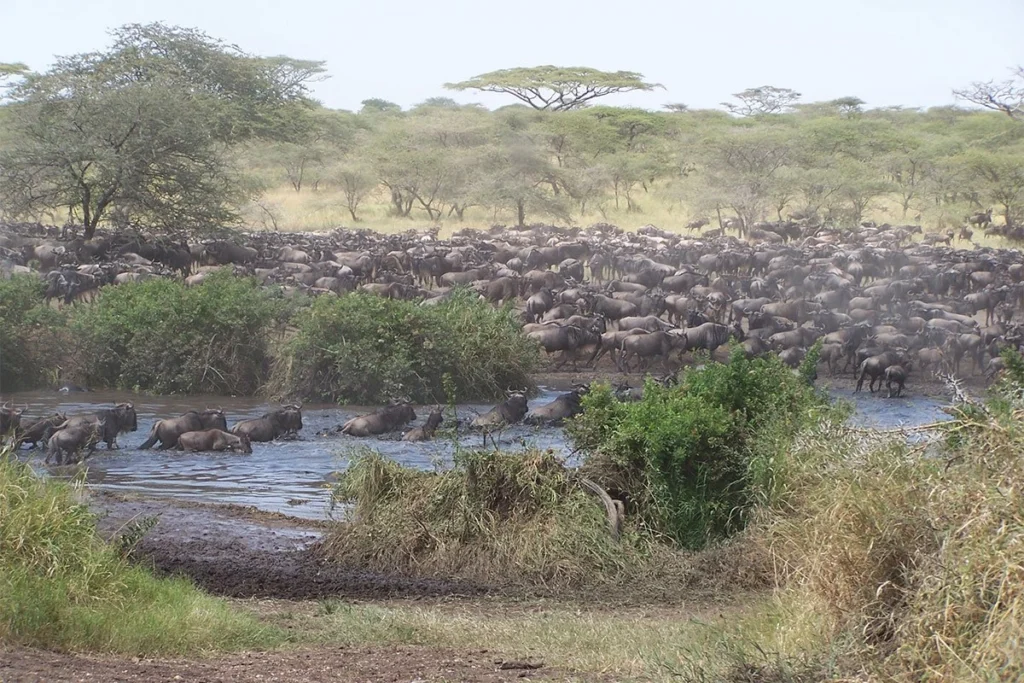
The Great Wildebeest Migration occurs in January, February, and March.
Exceeding one million wildebeests, also known as gnus, along with zebras and gazelles, inhabit the plains of Serengeti National Park throughout the initial month of the year, foraging on the short grass and preparing for migration.
Most wildebeest calves are born in February, with almost half a million calves entering the world during that month. As the Southern plains become depleted, the herds start to disperse westward in anticipation of their northward migration in the Spring.
This creates a remarkable spectacle during game drives; anticipate observing newborn calves, and if fortunate, you may observe a birth together with abundant predator activity.
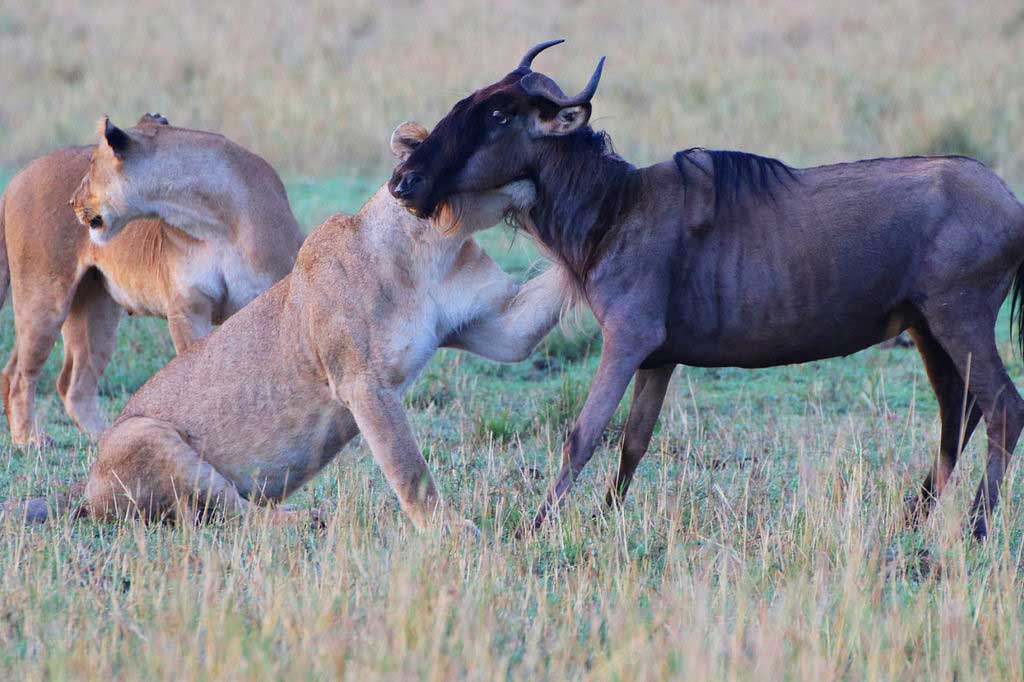
The wildebeest prompt their infants to rise promptly and integrate with the herds, where their safety is assured. Predators such as lions, leopards, spotted hyenas, and rare wild dogs lurk in the vicinity, poised to target the weak and vulnerable members of the herd.
A straightforward kill is not always assured, since female wildebeests automatically migrate to short grass plains to enhance visibility of approaching predators and create a protective barrier surrounding birthing mothers, so assuring the survival of most newborn calves.
As the brief dry season concludes (often at the end of March), the short-grass plains in the Southern Serengeti commence desiccation, prompting the wildebeest and zebras to migrate towards the western forests.
The Great Wildebeest Migration occurs in April and May.
Typically, April heralds the initial indications of migration, as hundreds of thousands of wildebeest commence their challenging trek across the western plains and ultimately northward.
The herds traverse the Ndoha and Dutwa plains nearby to the Mbalagweti River, potentially congregating at the Mbalagweti and Grumeti Rivers in anticipation of the crossing, a perilous barrier for the animals.
The Great Wildebeest Migration occurs in June and July.
The rutting season typically commences in June, characterized by intense confrontations among competing males seeking female attention. Concurrently, the dry season begins, leading to substantial aggregations of wildebeest in the Western Serengeti and along the southern banks of the Grumeti River. Every migrating animal confronts the peril of traversing the crocodile-infested river, and this spectacular crossing is among the most exhilarating occurrences of the Great Migration.
In early July, hundreds of thousands of wildebeest and zebra proceed north along the western boundary of the park towards the perilous Mara River in northern Serengeti, where the river crossing is a remarkable and exhilarating animal experience. The Crossings often commence in July, though the exact timing is contingent upon the rainfall.
The migrating herds are often located in the Northern Serengeti in July, with a part having reached the Masai Mara, where daily river crossings occur at the Mara and Talek rivers.
The Great Wildebeest Migration occurs in August, September, and October.
In early August, the migrating herds face the obstacle of traversing the Mara River and are dispersed throughout the northern region of the Masai Mara Reserve, with many remaining in the northern section of Serengeti National Park. It is important to acknowledge that there is no singular crossover. In certain locations, only a few individuals are present, but others exhibit a continuous movement of numerous animals for hours on end.
In early October, the migrating herds congregate in Kenya’s Masai Mara National Reserve in pursuit of fresh grazing grass. This is an excellent opportunity to embark on a safari in the Masai Mara National Reserve.
With the onset of the long rains in October, the herds embark on their arduous trip southward to the Serengeti in pursuit of fresh grass; yet, this transition does not signify an absence of peril, as threats persist in the form of predatory lion prides and hyena packs.
The Great Wildebeest Migration in November and December
In late October or early November, the wildebeest migrate from Kenya into the eastern Serengeti, traversing the Namiri Plains. By December, the wildebeest herds are dispersed over the eastern and southern regions, and the cycle resumes when the calving season commences anew.
Guidelines for Organizing Your Migration Safari
Reserve accommodations well in advance—preferably a year ahead—since lodges and camps quickly reach capacity, particularly during the peak Great Migration Safari season from May to October, which is considered Tanzania’s top season for safaris.
Meticulously plan your schedule, as the time of your wildebeest Migration Safari is contingent upon your desired experiences throughout the expedition. Be advised that migration is a year-round process, and certain phases, like as river crossings, are unpredictable.
Opt for private accommodations, as national parks tend to be overcrowded during the peak safari season (May to October). For privacy and enhanced access to wildlife herds, consider residing in a private reserve or conservancy.
Explore our suggested Wildebeest Serengeti Migration safaris below, or contact one of our Tanzania Safari Experts to assist you in customizing an itinerary according to your travel preferences.