
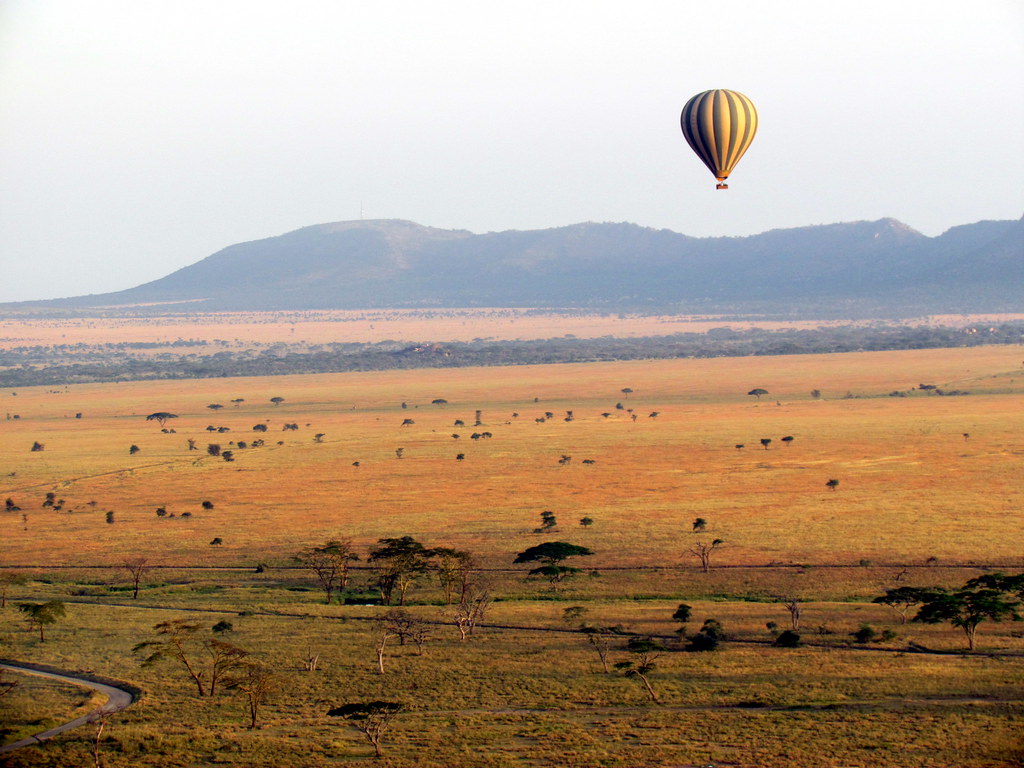
Hot Air balloon Safari in Serengeti
A hot air balloon safari in the Serengeti provides a uniquely distinct and unforgettable game-viewing experience in Eastern Africa. This is an experience you will undoubtedly remember long after your safari in Serengeti National Park. Hot air balloon expedition in the Serengeti The hot air balloon safari in Tanzania’s Serengeti provides a unique vantage point over the expansive Serengeti habitat, encompassing around 14,750 square kilometers in Northern Tanzania.
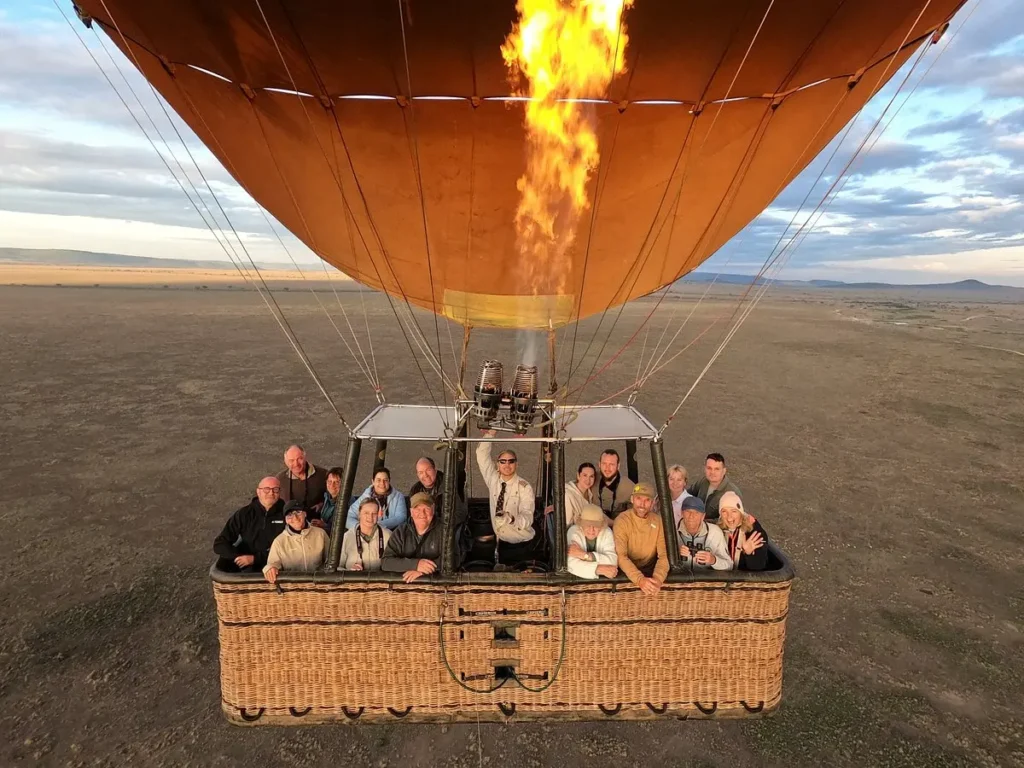
Tourists can observe herds of wildebeest, lions, giraffes, and elephants from around 1,000 feet, as well as the stunning savannah environment. A hot air balloon safari provides a distinct experience compared to game drives, as it does not adhere to predetermined routes. The balloons ascend effortlessly over the Serengeti, providing unique views of locations inaccessible by vehicle.
Hot air balloon operations in the Serengeti adhere to stringent standards set forth by the Tanzania Civil Aviation Authority. Only licensed and proficient pilots are permitted to operate these commercial balloons.
During a balloon journey in the Serengeti, the pilot must be adept at maneuvering the balloons by monitoring variations in wind direction at various altitudes. This technique necessitates advanced training and expertise with the underlying terrain. A balloon accommodates 12 to 16 individuals, and the experience endures for approximately one hour.
Licensed companies operating hot air balloons in Serengeti include Miracle Experience and Serengeti Balloon Safaris. We provide a 3-day Ngorongoro and Serengeti safari package, along with information on activities in Tanzania.
Organization of the Air Balloon Safari and Anticipated Experiences
Hot Air Balloon Safaris in the Serengeti commence between 5:30 and 6:15 AM. All enrolled participants are required to be awake between 4:30 AM and 5:00 AM. The majority of hot air balloon trips commence from Central Serengeti or near Seronera. This is the primary location for activity, particularly during the significant wildebeest migration. Numerous resident creatures persist here despite the migration of others.
Hot air balloon expedition in the Serengeti. Upon your readiness for the day, a driver will await you with a vehicle outside your tented camp or lodge, prepared to transport you to the launch point while it is still dark. Upon arrival at the launch location, you will observe the balloon crew diligently preparing for the event. The balloon envelope is inflated with powered fans, followed by the ignition of the propane burners. Upon finalizing preparations for launch, you will receive a briefing from the pilot. The pilot will inform all passengers about the ascent expectations and descending procedures.
The pilot and additional crew members will assist you in boarding the balloon. The balloon is partitioned into 4 to 6 compartments to facilitate enough visibility and equilibrium. Once all participants are aboard and situated, the hot air balloon in the Serengeti gradually ascends from the ground. There is an absence of noise and abrupt motion. The rise is gradual and smooth as you silently see the ground receding below. As the balloon ascends into the sky, a designated chase crew will monitor its trajectory from the ground and guarantee they are present for its landing. This tracking team comprises hospitality personnel, individuals responsible for ground logistics, and drivers.
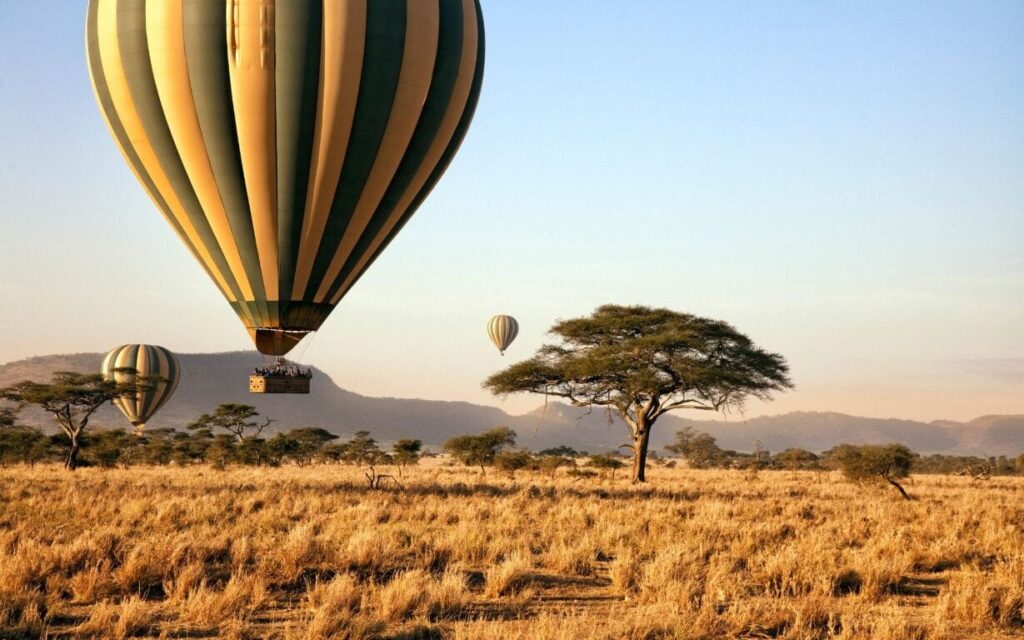
The pilot will modify the riding altitude to between 150 and 900 feet based on the visibility requirements below. What can you anticipate observing during the hot air balloon ride? Anticipate observing elephants and other animals foraging near rivers, predators congregating in packs, and tall giraffes consuming acacia foliage. The Pilot serves as the Guide, assisting in highlighting notable geography and identifying particular wildlife or migrating animal herds. The chase crew monitoring your movements can also be identified via jeeps below.
Hot air balloon expedition in Serengeti, Tanzania Following an hour of aerial observation of the expansive savannah and its fauna, the pilot will initiate descent at a predetermined location. Landings may be turbulent or serene based on meteorological conditions. Anticipate the basket to tilt prior to coming to a halt upon contact with the ground. The chasing team will assist in securing the balloon and facilitate the disembarkation of all individuals. Subsequently, you will be escorted to a bush breakfast at an appropriate spot, typically beneath a thorn tree. Breakfast is presented on an elongated table and comprises steaming coffee, fresh fruits, bread, and eggs (upon request). All culminates with a champagne toast commemorating the inaugural French balloonist of the 18th century. Consider exploring our 6-Day Serengeti and Gorilla Trekking safari package.
The Best Time for a Balloon Safari in Serengeti
The optimal period for a balloon safari in the Serengeti is the dry season. This transpires from June to October. The savannah grass is of moderate height, facilitating easy observation of fauna. Furthermore, the winds are tranquil, particularly in the morning, and visibility is unobstructed. Wildlife can be observed grazing from considerable distances due to enhanced visibility in the dry season. The prime period for wildebeest migration transpires from July to September. One can obtain stunning aerial vistas of the Serengeti during a balloon safari at this time.
Hot air balloon expedition in the Serengeti
While June to October is optimal for Balloon Safaris in the Serengeti, it is noteworthy that this activity is available throughout the entire year. The majority of balloon safaris are conducted in Central Serengeti and Ndutu, located at the southern extremity. From January to March, thousands of wildebeest calve in Ndutu. During that occurrence, Balloon Safaris are focused in the vicinity. An airborne perspective reveals predators pursuing young wildebeest and the ensuing drama as mothers defend their offspring.
What accounts for the unpopularity of the wet season (April, May, and November)? In the wet season, morning fog elevates cancellation rates for planned balloon launches. Visitors intending to go on a balloon safari in the Serengeti should select the season according to their desired observations. The optimal period to witness the big migration in Northern Serengeti is late July. The optimal period to observe predators at action is February in Ndutu. The Central Serengeti provides the most optimal and consistent wildlife sightings throughout the year.
The expense of a hot air balloon expedition in the Serengeti
A balloon safari in the Serengeti costs between $550 and $650 per individual. The cost is contingent upon the season and the specific firm facilitating the launch. The cost encompasses a bush breakfast with champagne, aircraft insurance, and one hour of flight time. The cost encompasses both collection and drop-off at your hotel or resort. Tipping the ground workers and pilots is customary, albeit not obligatory.
Bush breakfast following a balloon safari in the Serengeti Air Balloon Operators allocate a portion of their revenue to remit concession fees to the Tanzania National Parks Authority. This charge grants them authorization to deploy their air balloons within the park. The concession fees assist the government in financing airspace surveillance and wildlife preservation. It is essential to reserve your balloon safari in advance, particularly if you intend to partake between June and October. During the high season, flights are fully booked weeks ahead.
A balloon safari can be organized via your lodge or tour operator. Most tour operators provide balloon safaris as an ancillary activity or as an integral component of the entire itinerary. The cost of a balloon safari in the Serengeti is set and typically non-negotiable, save for large groups.
Factors to Contemplate When Organizing Your Balloon Safari in Serengeti
Before embarking on your inaugural balloon expedition, verify that you are not susceptible to vertigo. Exercise caution for alternative motion sicknesses and pay close attention during the morning safety briefing. The pilot will elucidate the proper stance for takeoff and landing.
Balloon safaris in the Serengeti commence early in the morning. The temperature might be exceedingly low. Wear layered clothing in the early morning and discard the upper layers as temperatures rise with the sunrise. To combat the early chill, don long-sleeved garments, fleece, and closed-toe footwear.
Hot air balloon excursion in the Serengeti Wild animals are susceptible to scented lotions and fragrances. Refrain from engaging with them, as you will be partaking in breakfast amidst the wilderness. A hyena can detect scents from miles away and may be drawn to your presence. Ensure you travel with a high-quality camera to document the fauna and the stunning scenery. Your camera should own an additional battery, as they deplete power rapidly at elevated altitudes.
Avoid traveling with a heavy bag due to the restricted space in the balloon basket. Transport a water bottle, mobile phone, and camera. Consume a light breakfast, anticipating that a more substantial meal will follow upon landing.
Make certain to utilize the restroom prior to departing your lodge for the balloon safari. No appropriate restroom facilities are available at the starting point.
Finally, ensure you reserve your balloon safari well in advance, as flights tend to reach capacity weeks prior to the launch date. It is strongly advised to provide cash gratuities to the workers if you found the experience engaging. Tipping is not obligatory; nonetheless, tourists typically provide $10 to $20 per individual to each crew member.