The Hidden History Of Tarangire National Park
The Hidden History Of Tarangire National Park, Tarangire National Park in Tanzania is regarded as the premier hidden gem of the country’s safari experience. While the lion justifiably thrives in the Serengeti and Ngorongoro Crater, Tarangire harbors a secret that surpasses its renowned baobabs and elephant populations. It is a region characterized by ancient migrations and close tribal connections among humans, wildlife, and the rhythm of the Tarangire River.

An exploration of the historical significance of Tarangire National Park.
Prior to its designation as a national park in 1970, Tarangire served as an essential dry-season habitat for migratory fauna in northern Tanzania. The Tarangire River, which traverses the park, served as the exclusive permanent water source for almost a mile. The animals arrived during the arid season to hydrate at Lake Manyara, the Maasai Steppe, and the distant Serengeti.
The seasonal migration constituted the foundation of Tarangire’s ecological uniqueness. In the 1950s, early British environmentalists noticed vast herds of wildlife and recommended the necessity of area protection. Initially established as a modest game reserve, it subsequently evolved into one of the most biologically varied national parks in Tanzania. Tarangire encompasses over 2,850 square kilometers of acacia forest, grassland, and marsh; this dynamic patchwork supports one of the highest concentrations of elephants in East Africa.
A visit to the History of Tarangire National Park.
The name ‘Tarangire’ originates from the Tarangire River, which is named after the Mbugwe people who have inhabited this region for centuries. Prior to the establishment of conservation fences, the Maasai, Mbugwe, and Barabaig communities coexisted with wildlife, following traditional migratory and grazing pathways in accordance with seasonal changes.
This land is sacred to the Maasai. The baobab trees are regarded as symbols of tenacity and wisdom, and it is believed that the ghosts of ancestors reside within their hollow trunks. The harmony between humans and animals was established through the respect for the natural world and the equilibrium between humanity and nature that contemporary conservation efforts aim to preserve.
The Barabaig, a Nilotic-speaking pastoral tribe, significantly influenced the cultural background of Tarangire. The Barabaig were noted for their intricate beading and unique rituals, as well as their practice of transhumance, moving sheep between pastures in accordance with seasonal changes. The comprehension of land cycles aided in educating the early conservationists about the delicate rhythm of the ecosystem.
Wildlife and Ecology: The Tarangire Phenomenon.
The landscape of Tarangire conveys a narrative of survival and adaptation. Centuries of migration and drought have resulted in the presence of baobabs in the park, some of which are 1,000 years old. They possess enlarged stems that retain water, so supporting them during arid seasons when few organisms can endure.
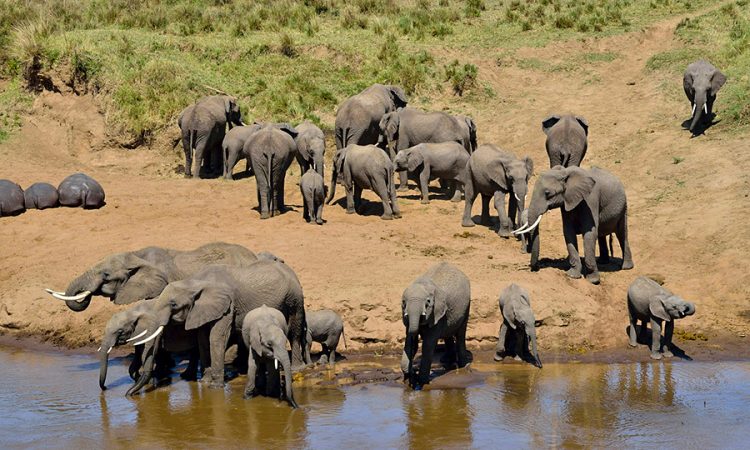
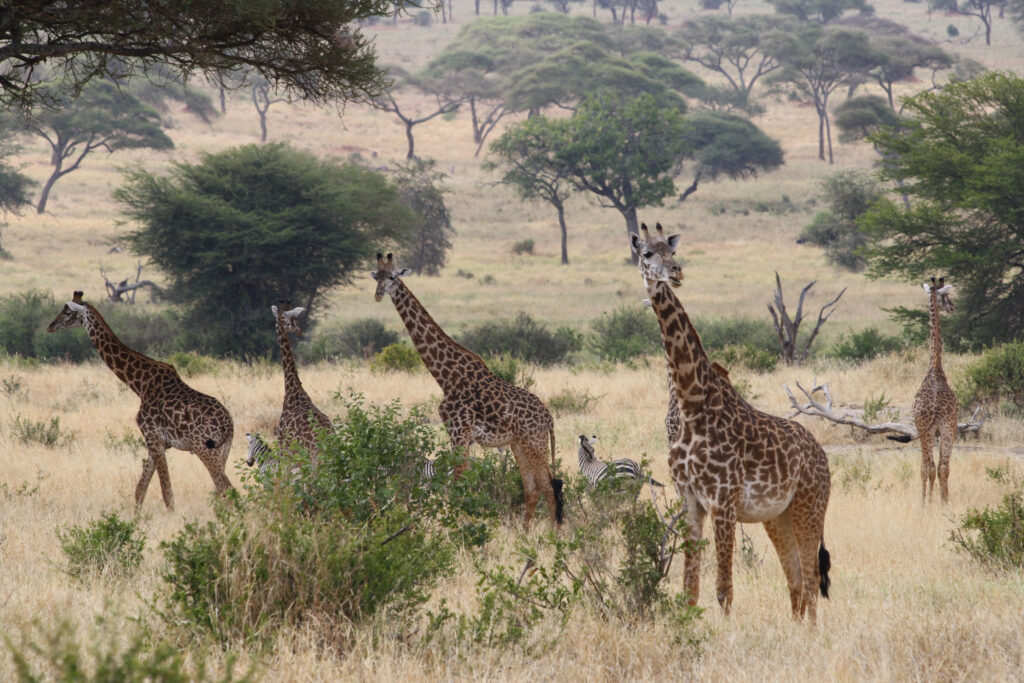
The park’s wildlife richness is astonishing. During the arid season (June to October), multitudes of animals congregate along the river. Extensive herds of elephants, numbering up to 300, inhabit the riverbanks alongside wildebeest, zebra, eland, impala, and buffalo. Lions, leopards, cheetahs, and hyenas, as predators, closely pursue their prey, rendering Tarangire a vibrant tableau of life.
Tarangire is a haven for ornithologists, with over 550 bird species documented. The park is the premier location for birdwatching throughout the year, featuring the lovebird with its vibrant yellow collar, the Kori bustard, the largest flying bird in Africa, and the heaviest avian species I have encountered. The rainy season brings numerous storks, pelicans, and flamingos congregating in the wetlands, creating a vibrant spectacle on the golden savannah.
Tarangire’s impact on Tanzania’s conservation efforts.
Tarangire was pivotal to the conservation movement in Tanzania following the era of independence. Following the establishment of the new government in 1961 after achieving independence, Julius Nyerere’s administration emphasized wildlife conservation as a component of national identity. In 1961, the Arusha Manifesto was ratified in Arusha, declaring that wildlife conservation is essential for the benefit of future generations.
Tarangire was one of the initial symbols of this concept. The establishment of it as a national park ensured the protection of its dry-season environment and established a model for community-based conservation in other areas. Several wildlife management zones border the park, facilitating tourism for residents while also supporting migratory pathways.
Misplaced archeological and historical artifacts.
Tarangire possesses vestiges of ancient human existence alongside its fauna. Archaeological investigations next to the park have revealed Stone Age artifacts, pottery, and rock shelters, supporting the hypothesis that early humans inhabited these regions. These discoveries link Tarangire to the broader context of the Great Rift Valley, often termed the Cradle of Mankind.
The traditional baobab trees bear witness to history. Early explorers and hunters utilized natural formations for their homes and supplies. Others possess sculptures exceeding a century in age, the obsolete remnants of human encounters in a brutal landscape.
Lost archaeological and historical treasures.
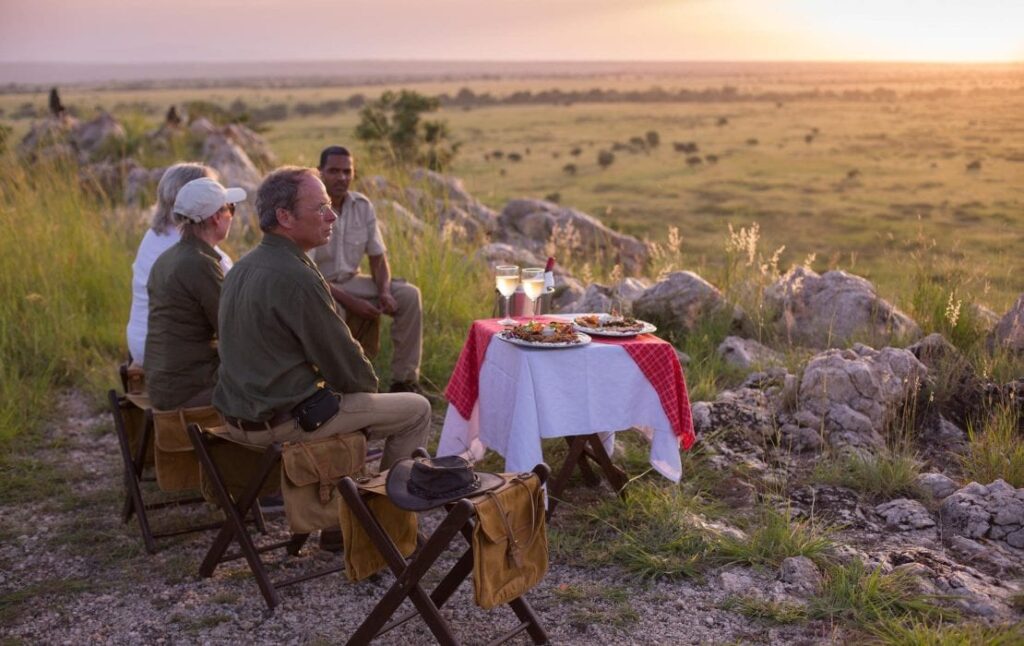
Tarangire is now part of Tanzania’s Northern Safari Circuit, however it is significantly less crowded than the Serengeti or Ngorongoro. It is secluded and pristine in its beauty, appealing to travelers seeking authenticity and tranquility. The lodges and tented camps inside the safari seamlessly blend with the natural environment, with the majority operating in an eco-friendly manner that is predominantly solar-powered and sustainable.
Typical activities in Tarangire National Park include traditional game drives, walking safaris accompanied by Maasai guardians, and nocturnal safaris that reveal the nocturnal wildlife, such as bush infants, genets, and hunting leopards. A unique experience for guests is the opportunity to observe the Tarangire River Valley via a hot air balloon safari, where herds traverse the plains at sunrise amidst the baobabs.
Community tours to Maasai villages or local marketplaces provide visitors with a comprehensive understanding of the activities of the surrounding populace. These experiences enable travelers to understand the cultural context inherent in the Tarangire ecosystem.