Great Migration Safaris In Serengeti
Great Migration Safaris In Serengeti, Serengeti National Park in Tanzania hosts one of the most remarkable animal phenomena on Earth, the Great Migration. Annually, millions of wildebeests and hundreds of thousands of zebras and gazelles undertake a round migration from the Serengeti to the Maasai Mara in Kenya in pursuit of fresh grazing areas.
The massive movement of animals is not only a natural occurrence; it is a remarkable event that has established the Serengeti as one of the most sought-after safari destinations in Tanzania for travelers globally. A Great Migration safari in the Serengeti offers the chance to witness fundamental survival instincts, thrilling predator-prey interactions, and the stunning expanse of Tanzania’s natural savannahs.
Studying the Great Migration Cycle
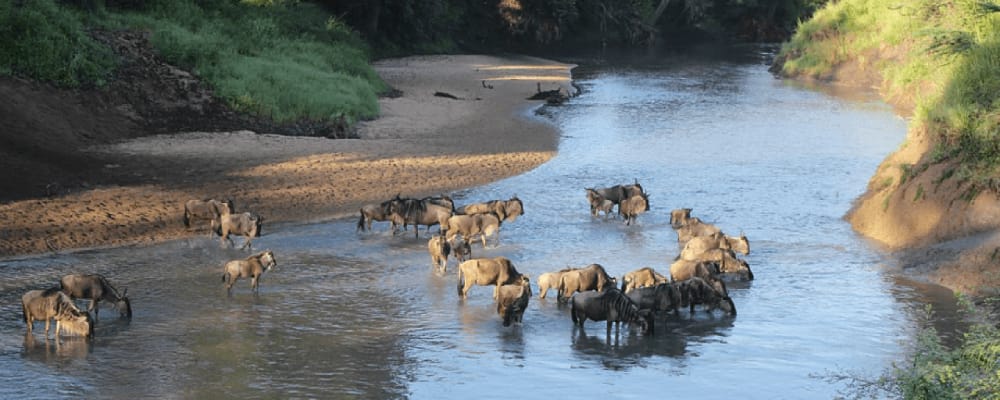
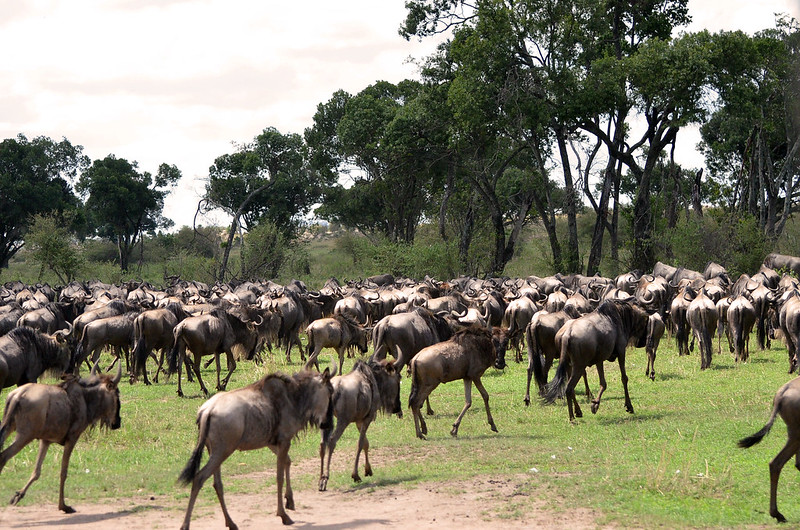
The Great Migration is a year-round phenomenon that adheres to precipitation patterns. The herds migrate on a clockwise trajectory exceeding 1,800 miles annually. From December to March, wildebeests calve in the verdant grasslands of the southern Serengeti and Ngorongoro Conservation Area. The calving season spans several weeks and draws predators such as lions, cheetahs, hyenas, and leopards, culminating in the birth of about 400,000 calves. This is the most dynamic period for photographers, since prey is exceptionally active and close encounters are guaranteed.
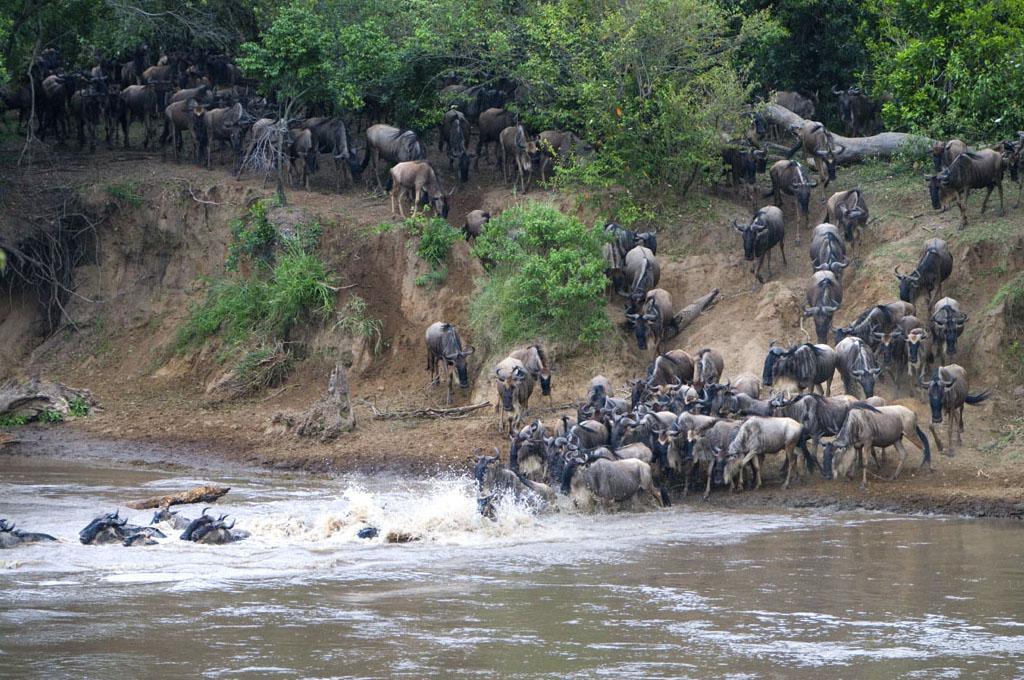
The herds migrate gradually northward from April to June, encountering the Grumeti River crossing, where large Nile crocodiles lie in wait to ambush their prey. From July to October, the peak of migration transpires at the Mara River in the northern Serengeti, where numerous wildebeests and zebras risk their lives to traverse crocodile-infested waters into Kenya. In November, the rains return to the south, prompting the herds to return and commence anew.
Optimal Timing for a Migration Safari
The timing of migratory observation is a question of personal preference. The period from late January to March on the southern Serengeti plains is optimal for observing the calving season, accompanied by significant predator activity. The optimal period for river crossings in the northern Serengeti at the Mara River is from July to September.
Visitors in April, May, and November will experience reduced crowds, verdant landscapes, and lower safari costs; but, locating the herds may be more challenging. The Serengeti is a remarkable location year-round, and even outside of big migration occasions, the park remains one of the most wildlife-abundant areas in Africa.\
Prospective Locations in Serengeti for Conducting Migration Safaris
Serengeti National Park provides varied migratory experiences throughout its distinct locations. The Ndutu grasslands and Southern Serengeti are renowned for their calving and predation zones. The Western Corridor is synonymous with the Grumeti River crossing, where animals must across a crocodile-infested river. The Northern Serengeti and the Mara River are renowned for their striking imagery of wildebeest crossings and the ensuing struggles for survival.
The Central Serengeti, or Seronera, serves as the park’s nucleus, teeming with wildlife year-round, making it an optimal headquarters for anyone seeking both migration observation and additional game drives. A well-structured safari itinerary that encompasses many regions ensures that a traveler witnesses the entire migration.
Fauna excluding the Migration
While the migration is the primary allure, Serengeti National Park possesses numerous additional offerings. The park features the Big Five—lions, elephants, leopards, rhinoceroses, and buffalo—establishing it as a comprehensive safari destination. The savannahs are home to cheetahs, giraffes, hippopotamuses, hyenas, and over 500 avian species.
Migrating safaris provide guests with exhilarating encounters of predator-prey dynamics, while the diverse ecosystems within the park guarantee sightings, irrespective of the herds’ locations. The Savannah, woods, rivers, and kopjes of the Serengeti provide a remarkable diversity of animals, ensuring that each game drive is rewarding.
Safari Experiences During the Migration
Safaris for the Serengeti Great Migration can be tailored to accommodate various travel preferences. Luxury lodges and tented camps provide the convenience of proximity to herds, while budget camping safaris immerse daring travelers in the wilderness. A balloon safari over the Serengeti plains offers a panoramic perspective of the migratory herds before dawn, creating an indelible photography opportunity.
Guided walking safaris in certain places immerse the traveler in nature, while nocturnal drives in adjacent conservancies reveal the nightlife. The migration constitutes a singular experience, regardless of whether one participates in a luxury, mid-range, or budget safari.
Practical Travel Tips for Migration Safari
Individuals intending to go on a Serengeti migration tour should secure bookings well in advance, especially during the peak months of river crossings when accommodations are typically at capacity. Game drives necessitate the inclusion of binoculars, a quality camera, sunscreen, and lightweight, layered attire for optimal comfort. A 4×4 safari vehicle is advisable, as certain areas of the park are isolated and include rugged terrain.
Engaging a seasoned tour operator will ensure that the excursions are executed in appropriate locations according to the herds’ migration patterns, as tracking their movement is challenging. Visitors should contemplate include Serengeti alongside Ngorongoro Crater, Tarangire, or Lake Manyara in a comprehensive northern Tanzania safari itinerary.
The Serengeti Migration is essential to witness.
The Serengeti Great Migration is regarded as one of the seven Natural Wonders of Africa and a UNESCO World Heritage site that every safari enthusiast should witness. It encompasses not just the movement of animals but also survival and adaptation, as well as the intricate dynamics between predators and prey.
Witnessing thousands of wildebeest traverse rivers, elude predators, or nurture newborn calves despite formidable challenges is a profound testament to the resilience of nature. A Great Migration safari in the Serengeti is the pinnacle of safari experiences for travelers.
Concluding Remarks
The Great Migration in the Serengeti is an essential tour for wildlife aficionados. The migration features some of Africa’s most dramatic spectacles, including the crossings of the Mara River, predator hunts during the calving season, and the profound majesty of the journey itself. Regardless of whether you are a professional photographer, a wildlife enthusiast, or a first-time tourist to Africa, witnessing this unique phenomena will provide an unforgettable experience.
The Serengeti is a premier safari destination in Tanzania, renowned for its expansive landscapes, diverse animals, and the iconic migration. The optimal period to embark on an East African safari is during the migration, offering an unforgettable trip.