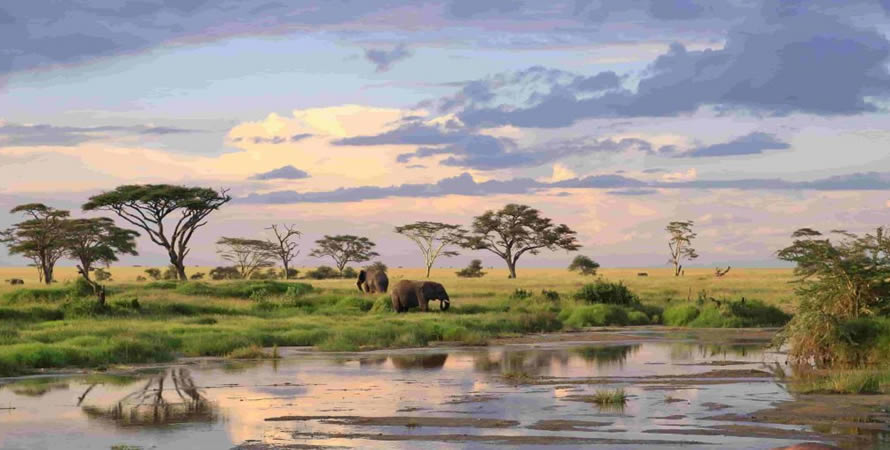
Western Corridor of Serengeti National Park
Western Corridor of Serengeti National Park, referred to as Serengeti West, is characterized as the terrain extending along the Grumeti River for approximately 100 kilometers from Serengeti Central to Lake Victoria, Africa’s largest freshwater lake. Various rivers exist. Presently, two rivers, the Mbalageti and the Grumeti, constitute the remarkable geomorphological features of the western corridor of Serengeti National Park.
All the rivers flow predominantly in a parallel western direction, with an approximate distance of 20 kilometers between each river. The western corridor of Serengeti National Park is more verdant than Seronera, and although it hosts a substantial population of resident wildlife, locating them amidst the dense vegetation is more challenging. It is beneficial to enlist an assistant knowledgeable about the region. This territory is particularly notable in June and July, when the migration proceeds northward from the Seronera and confronts the perilous obstacle of traversing the crocodile-infested Grumeti River. A significant number of local crocodiles rely entirely on this yearly springtime event, remaining inactive, with yellowed teeth, and obscured by muck for the remainder of the year.
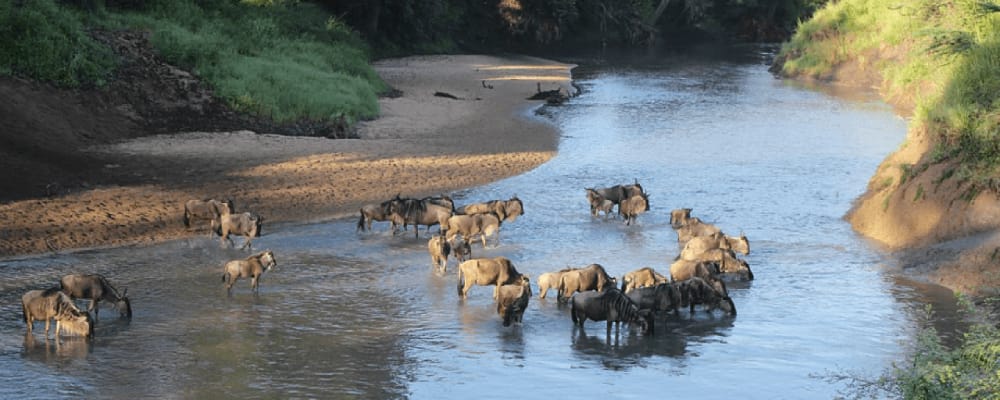
The Grumeti and Mbalageti rivers in the western corridor of Serengeti National Park provide sustenance to regions of riverine forest as they flow towards the lake. Victoria and visitors will have the opportunity to ski on a select few hills and mountains in the vicinity, rendering the Western corridor of Serengeti National Park a noteworthy attraction not to be overlooked. This location hosts numerous permanent wildlife residents, making it favorable for both the species and visitors to observe the animals year-round.
The wildebeest’s passage across this corridor into the central Serengeti National Park may be less extensive and captivating than the occurrences in the northern Serengeti National Park. Traversing the Mara River northward is intriguing, offering a captivating experience for travelers. During the wildebeest migration, the Grumeti River presents the initial obstacle for the wildebeest as they attempt to cross. At this juncture, numerous wildebeest are vulnerable to attacks from various predators, including Nile crocodiles inhabiting the river.
The thin strip of land constituting the western corridor is quite flat relative to the other northern sections of Serengeti National Park, especially in the steep northern portion. The western corridor is predominantly moist and well forested in contrast to the southern Serengeti plains. The flora include a combination of woods and open grassland, interspersed with some whistling thorns.
What are some of the wildlife in the western corridor?
As previously said, there is some permeable wildlife in this area of Serengeti National Park. Consequently, the sector has perpetually accommodated the most experienced visitors. The savannah grassland in the western region of Serengeti National Park, particularly south of the Grumeti River, serves as a habitat for various animal species residing in this expansive area. The region hosts a substantial population of giraffes typically located in this western corridor. Additional animals encompass lions, zebras, wildebeests, elephants, and others. Nevertheless, in the northeast, there remain uncharted grasslands that accommodate a substantial number of cheetahs. Visitors can observe these animals by participating in hot air balloon safaris, which offer an excellent vantage point of the great wildebeest migration from June until the end of October.
What accommodation facilities exist in the western corridor?
Numerous opulent safari lodges exist in the western corridor of Serengeti National Park, drawn by the region’s low visitor levels. This locale presents significant challenges in locating movable tents or camps. During the wildebeest migration, namely from May to June, some mobile tents are established in this region, attracting numerous safari guests.