Kopjes in Serengeti
Kopjes in Serengeti, the expansive plains of the Serengeti are intermittently interrupted by isolated, extensively eroded granite formations known as kopjes. Kopjes, often referred to as inselbergs or “island hills,” were formed millions of years ago when volcanic bubbles emerged and consolidated at the surface, following undergoing erosion from rains and floods, resulting in the very beautiful and sensuous shapes observed today. Rainwater runoff from the kopjes and permanent water puddles trapped in rocky crevices enhances wildlife visibility during the dry season, as lions often lie in ambush for other animals approaching to feed or drink; therefore, exercise caution when traversing kopjes.
Lions, nearly indistinguishable from the grass during the dry season, are more readily observable at some rocky kopjes, granite inselbergs dispersed throughout the terrain. The Moru Kopjes are favored by many felines, including lions, leopards, servals, and caracals, and elephants may also inhabit the vicinity. The kopjes have a rare and clearly marked Maasai rock-art site. The lions, after which they are called, frequently utilize Simba Kopjes for sunbathing. The Gol Kopjes are favored by cheetahs, whilst the Maasai Kopjes draw lions and significantly large cobras.
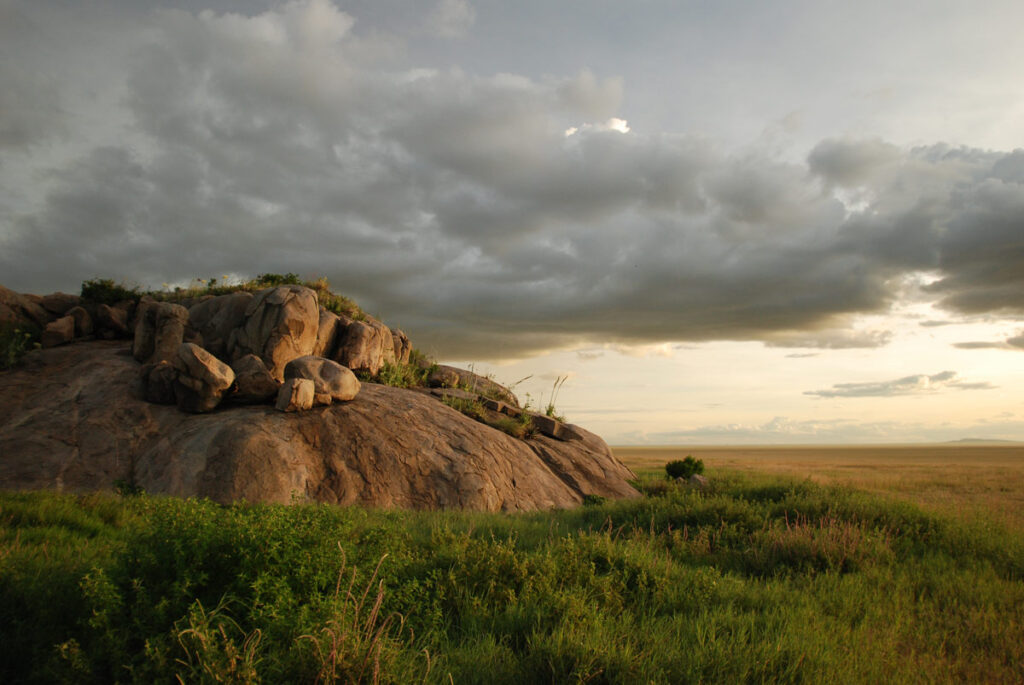
Moru Kopjes
Humans have historically been drawn to kopjes, including hunter-gatherers like the Dorobo, who were displaced in 1955, and seasonal nomads such as Maasai cattle herders. The Maasai, displaced in 1959, left a tangible imprint on a rock shelter located on one of the Moru Kopjes, 32 kilometers south of Seronera. A natural rock shelter is adorned with rock paintings (in red, white, and black) depicting Maasai shields that resemble the ceremonial shields still utilized today. The paintings, among drawings of elephants and indistinct animal and human figures, were created by young Maasai warriors (morani) who utilized the place for an orpul meat-feasting, as evidenced by the soot on the shelter’s ceiling. In accordance with Maasai tradition, junior warriors were forbidden from consuming meat, particularly in public; so, they would illicitly procure a cow and transport it here. Like all rock art, the paintings are ephemeral.
The rock gongs
The lithophonic instruments Another enigmatic kopje, located 1 km away, features rock gongs, an assemblage of three loose stones. A certain huge lemon-shaped wedge features several circular indentations, formed by individuals repeatedly striking the rock with stones to generate peculiar reverberative and metallic noises, which vary based on the striking location. While rock gongs are currently utilized solely by tourists, the wedge-shaped variant was undoubtedly employed as a musical instrument long before the Maasai’s arrival a few centuries ago, as they possess no musical tradition involving percussive instruments. Additionally, analogous gong rocks have been discovered as far south as Zimbabwe. Nevertheless, the precise age and purpose of the gongs remain enigmatic due to the little knowledge regarding the now-extinct hunter-gatherers who presumably crafted and utilized them. Notably, time spent exploring the boulders may yield an unexpected finding — in 1992, a previously unidentified species of tree frog was discovered in one of the rock gong’s depressions.