What are the Big Five of Tanzania Safaris
The What are the Big Five of Tanzania Safaris include the lion, leopard, rhinoceros, elephant, and Cape buffalo. The phrase was originated by big-game hunters and denotes the five most challenging species to pursue on foot in Africa; it is now commonly utilized by safari tour operators and tourists.
Tanzania presents an abundance of natural attractions due to its great biodiversity, encompassing exquisite flora and fauna that draw numerous visitors globally. Tourists visit Tanzania for diverse purposes, including observing the Big Five wildlife and ascending Mount Kilimanjaro, the tallest mountain in Africa and the highest free-standing mountain globally. The Big Five wildlife species are the African elephant, African lion, African leopard, Cape buffalo, and rhinoceros. Numerous African nations host the Big Five wildlife species; nevertheless, Tanzania provides the most exceptional experience due to its substantial populations of each of these iconic creatures.
The term “big five animals” refers not to their size, but to their status as the most lethal mammals in Africa. The name “big five” was used by hunters to describe the difficulty of hunting these animals, despite their status as the most coveted targets during hunts. However, improved rules in national parks have led to a decline in hunting, enabling visitors to observe the big five wildlife species in Tanzanian national parks and other protected regions in Africa. The phrase Big Five Tanzania safari remains prevalent among guests and guides, particularly during game drives.
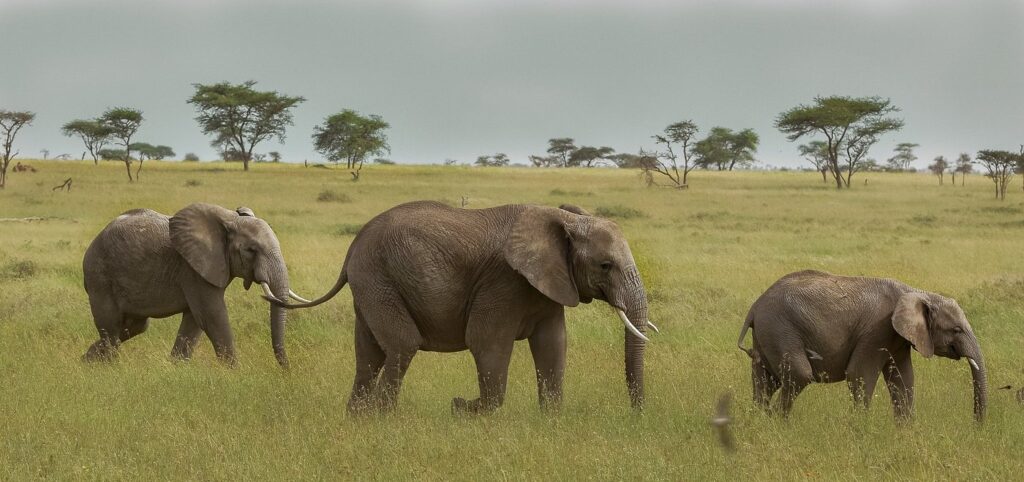
African Elephants
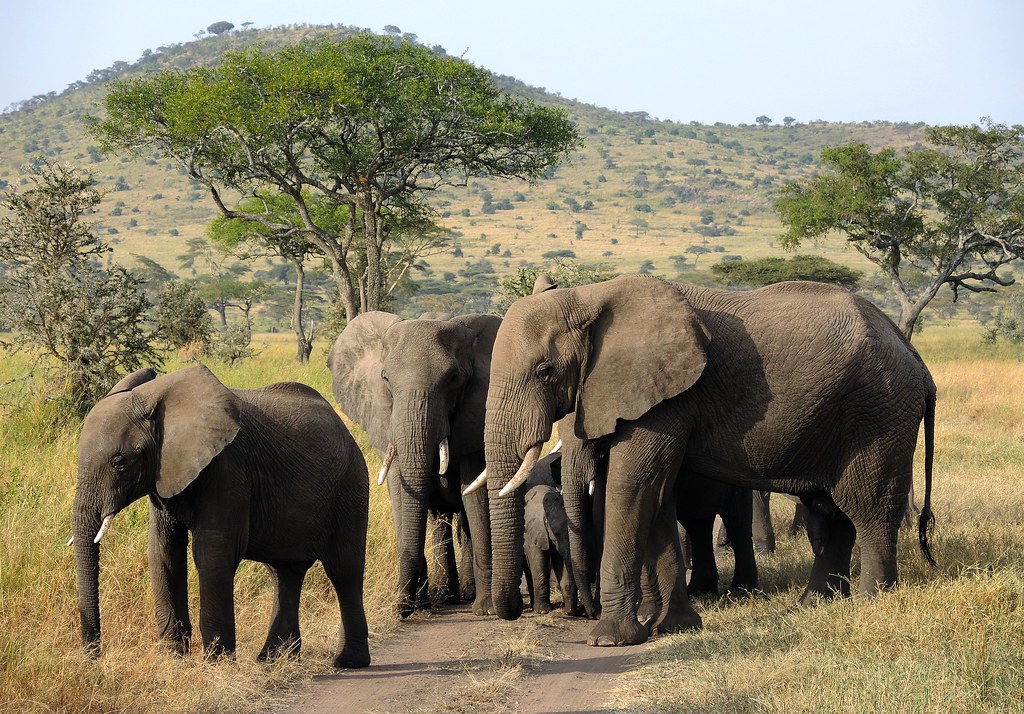
Elephants are the largest terrestrial mammals, measuring between 8.2 and 13 feet in height and weighing between 5,000 and 14,000 pounds. Elephants are very clever herbivores that predominantly consume vegetation such as tree bark, fruits, and leaves.
Destinations in Tanzania for observing African elephants
African elephants in Tanzania are observable at Selous Game Reserve, Arusha National Park, Serengeti National Park, Mount Kilimanjaro, Ngorongoro Crater, Ruaha National Park, Lake Manyara National Park, and Tarangire National Park.
African Lions
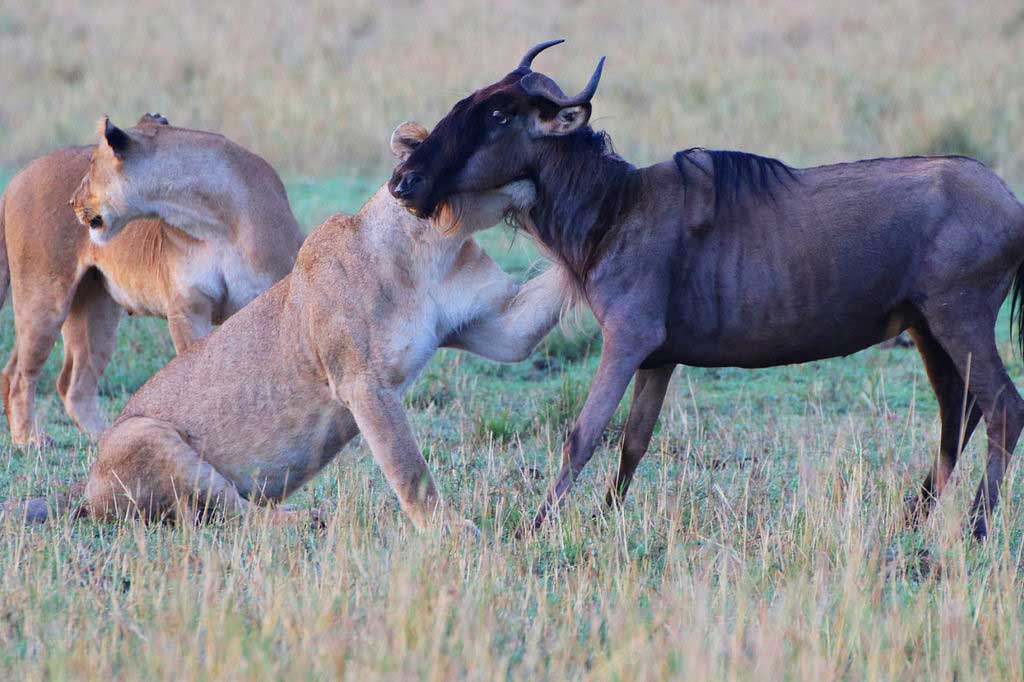
African lions are referred to be the rulers of the jungle and are regarded as the most formidable predators in Africa. Lions are predatory and gregarious creatures that reside in groups known as prides, typically consisting of 15 to 25 individuals, predominantly females and their offspring. Each pride typically consists of 1 to 4 males responsible for territorial protection; these males depart from the group upon reaching adolescence. Male lions are distinguishable by their manes and typically do not engage in hunting, as the females are responsible for procuring food to nourish their cubs.
It is posited that lionesses have superior hunting capabilities compared to lions, attributed to their lighter weight, agility, bodily flexibility, and more slender physique, which enables them to remain concealed in grass for extended periods. Lions are recognized for their extensive sleep, averaging over 20 hours daily, due to their few sweat glands, necessitating rest to conserve energy. Tanzania possesses the greatest lion population among African locales, observable in various national parks.
Locations in Tanzania where African lions are observable
Lions can be observed during a Tanzania safari in Serengeti National Park, Selous National Park, Tarangire National Park, Lake Manyara National Park, Ruaha National Park, and Ngorongoro Crater, among others.
Cape Buffaloes
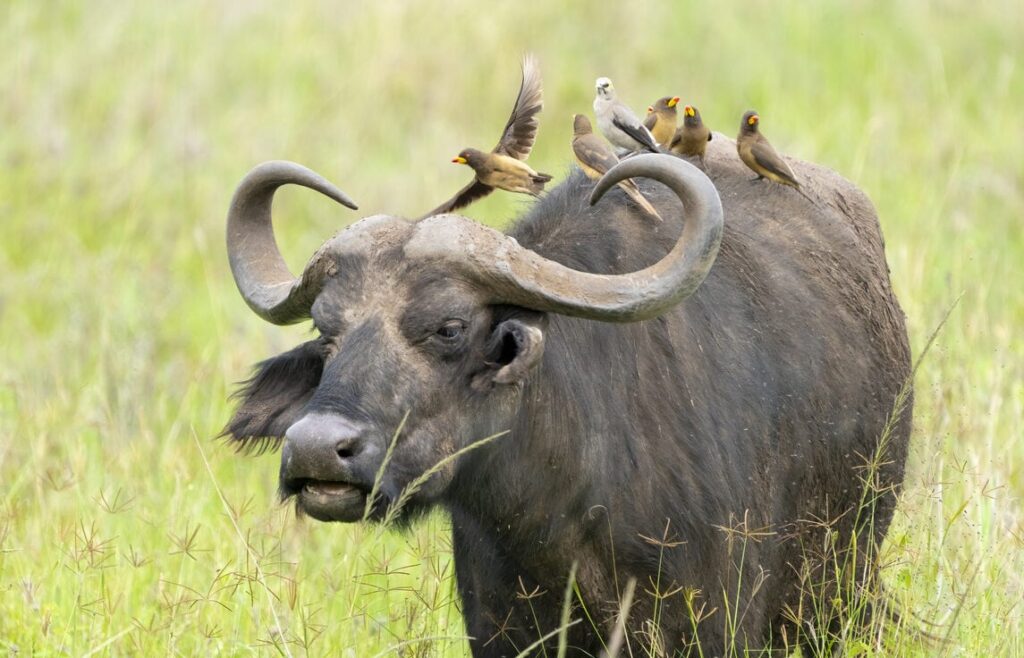
The cape buffaloes attain a shoulder height of 1.6 meters, a body length ranging from 1.5 to 3.5 meters, and an approximate weight of 700 kilograms. Buffaloes inhabit collective groups known as herds and graze on grass. They are formidable, perilous, and deemed surprisingly detrimental when encountered in isolation, injured, or provoked, as they possess the capacity to lethally harm anything that approaches them. They possess an exceptional auditory acuity owing to their deficient visual capabilities.
The African cape buffaloes have no predators except for lions and perhaps crocodiles. African buffaloes are herbivores that consume vegetation, including grass, leaves, stems, trees, and herbs. They typically graze in the early morning and late evening, using up to 40 liters of water daily.
Locations in Tanzania where Cape buffaloes are observable
Cape buffaloes inhabit several Tanzanian national parks, including Serengeti National Park, Selous Game Reserve, Mount Kilimanjaro, Tarangire National Park, Arusha National Park, Ngorongoro Crater, and Katavi National Park, among others.
African leopard
The African leopard (Panthera pardus pardus) is a sizable, carnivorous feline characterized by either tawny fur adorned with dark rosette-like patterns or solid black fur. The leopard is regarded as the most challenging of the big five to hunt due to its nocturnal and elusive behavior. They exhibit caution towards humans and will flee when confronted with peril. The leopard is inherently solitary and exhibits peak activity from dusk to dawn, though it may engage in hunting during daylight hours in certain regions. Leopards inhabit the savanna grasslands, scrublands, and wooded regions of Africa.
Rhinos
Rhinoceroses are severely endangered species in Tanzania and other wilderness regions of Africa, with populations rapidly declining in recent years owing to poaching. Rhinoceroses are solitary, large, and formidable creatures, with an adult weighing approximately 2,500 kg and standing 5 to 6 feet tall. They are herbivores that consume vegetation, such as plants, grass, stems, leaves, fruits, tree branches, and roots.
Locations in Tanzania for watching Rhinos
Tanzania offers several locations for rhino observation, including Tarangire National Park, Serengeti National Park, and Ngorongoro Crater.
The Big Five wildlife species in Tanzania can be observed during a safari game drive in an open-roof vehicle, a nocturnal game drive utilizing spotlights, a guided nature walk exploring the national parks on foot, and a boat ride along the water bodies. If you wish to partake in these remarkable activities during your Tanzania safari, you may contact All Tanzania Safaris .
Best time to go for the big five wildlife animals in Tanzania
A big five wildlife safari in Tanzania can be undertaken year-round; however, the optimal period is during the dry season from June to October. During this time, vegetation is sparse, roads are navigable, and the big five animals congregate around water sources, facilitating clear visibility and excellent photographic opportunities.
In addition to the big five, Tanzania is home to diverse wildlife, including substantial populations of chimpanzees, monkeys, baboons, as well as hippos, impalas, wildebeests, elands, and many bird species. Encountering the Big Five wildlife species in Tanzania is an extraordinary and indelible experience. Consequently, to avoid missing this exceptional experience, you may reach out to All Tanzania Safaris for a range of Tanzania safari packages.