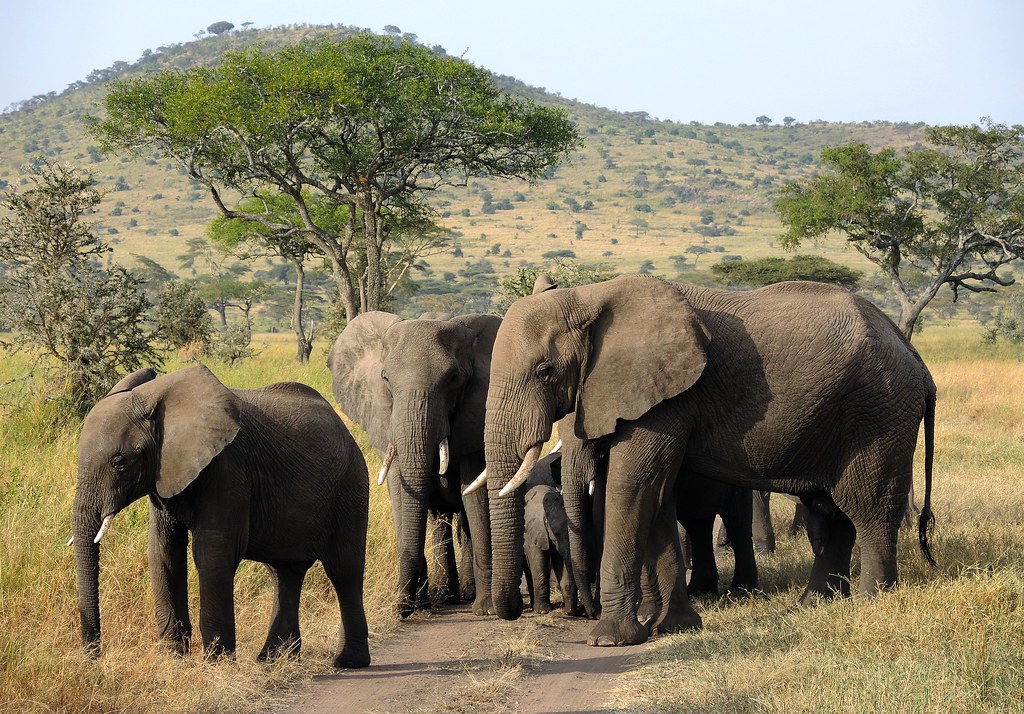
The Best Four Places to See Elephants In Tanzania
The Best Four Places to See Elephants In Tanzania, Tanzania is among the premier safari sites in Africa, and few experiences rival the breathtaking sight of a wild elephant herd. These majestic creatures are emblematic of the African safari, and Tanzania offers some of the most fulfilling locations to observe them in their native environments.
Elephants traverse expansive savannahs and deep woodlands, frequently in substantial herds within numerous national parks. The following are the four premier locations to observe elephants in Tanzania, along by practical advice, notable features, and justifications for visiting each park.
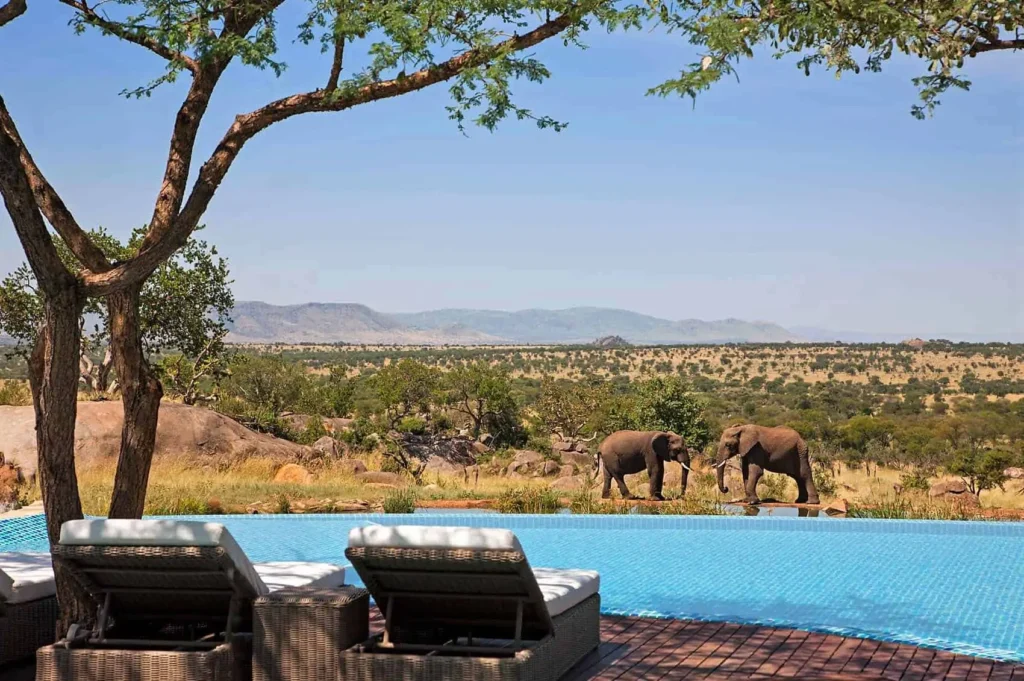
Serengeti National Park: Elephants Amidst Wildebeest Migration
The Serengeti is renowned for the Great Wildebeest Migration, although it also boasts a significant elephant population. Although the herds in this area are smaller than those in Tarangire, it is not unusual for visitors to observe elephants traversing the plains in search of water and shade. The optimal period to observe elephants in the Serengeti is the dry season, spanning from June to October, when wildlife congregates along rivers and waterholes.
Envision elephants amidst a panorama of migrating wildebeest and giraffes, accompanied by predators such as lions — this epitomizes the quintessential African safari. Game drives in middle Serengeti and alongside the Grumeti River, which offers particularly favorable elephant sightings.
Tarangire National Park: The Elephant Realm of Tanzania
Tarangire National Park, recognized as the land of elephants, boasts the largest density of elephants in northern Tanzania. In the dry season, herds of up to 300 elephants gather along the Tarangire River, creating one of Africa’s most remarkable displays of elephants. The park is adorned with old baobab trees, enhancing the environment as elephants traverse beneath their shade or strip their bark for sustenance.
Tarangire is less congested than the Serengeti, allowing guests to have a more personal safari experience. Photographers particularly favor Tarangire for the chance to capture close-up images of elephants against a striking backdrop. The park offers the opportunity to observe elephants alongside other animals, including lions, leopards, zebras, and more than 500 bird species.
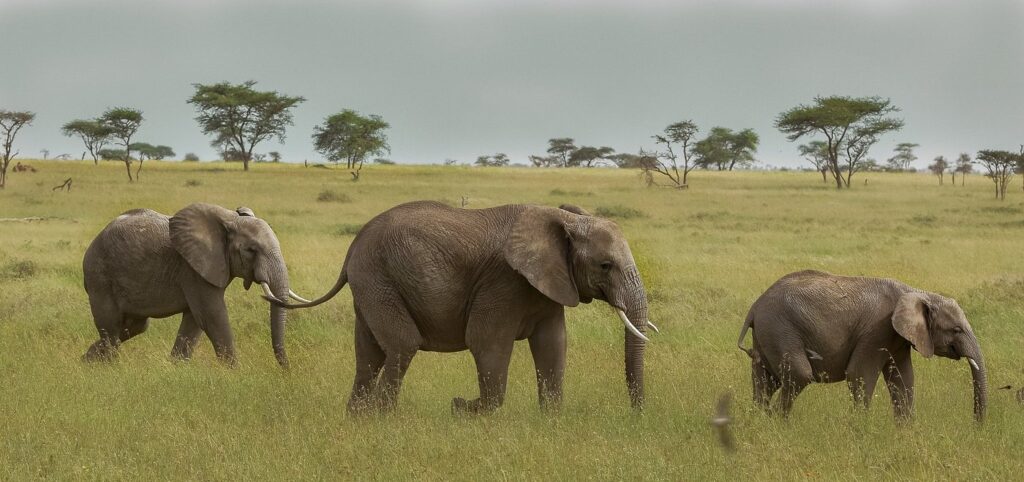
Ngorongoro Crater: Intimate Interactions with Majestic Beasts
The Ngorongoro Crater is a UNESCO World Heritage Site and one of the most distinctive safari destinations globally. Although numerous people concentrate on the populations of lions, buffalo, and rhinos in the crater, the elephants here are equally remarkable. The elephants of Ngorongoro are distinguished by their substantial tusks, among the largest in East Africa. These colossal creatures are frequently observed on the crater floor, foraging near Lake Magadi or traversing the verdant wetlands.
Given the crater’s designation as a self-contained habitat, it is highly probable that you will observe elephants at an exceptionally close proximity. A safari in Ngorongoro, Tanzania, is exceptional due to the opportunity to observe elephants with a remarkable variety of species within a single day’s game drive.
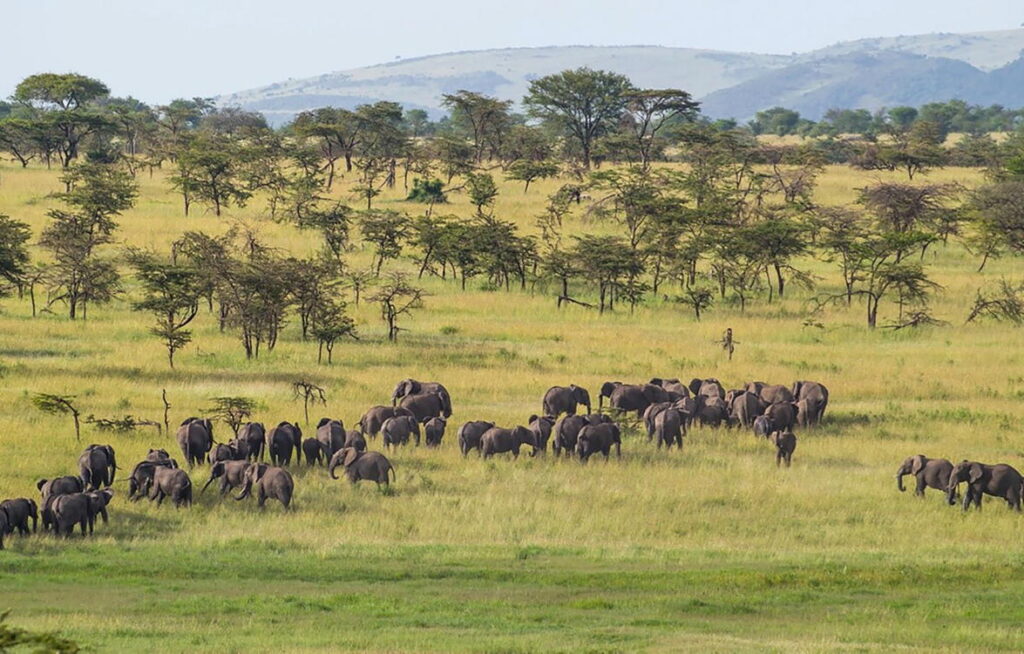
Selous Game Reserve (Nyerere National Park): Untamed and Isolated Habitat for Elephants
For travelers seeking a more secluded and challenging safari, the Selous Game Reserve, now known as Nyerere National Park, is an excellent option. Spanning over 30,000 square kilometres, it is among the largest protected regions in Africa, housing significant elephant herds. Selous receives less visitors than northern parks, resulting in more authentic and exclusive experiences.
Elephants in this region typically gather around the Rufiji River, and boat safaris provide a distinctive opportunity to observe them drinking, bathing, or traversing the river. The park’s secluded location renders it optimal for walking safaris, wherein seasoned guides accompany you on foot for secure yet exhilarating interactions with elephants. Selous offers an authentic safari experience, perfect for thrill-seekers and individuals eager to observe elephants in their natural habitat.
What is the best time for observing elephants in Tanzania?
The best time for observing elephants throughout all four locations is the dry season, spanning from June to October. In these months, water becomes limited, prompting elephants to gather around rivers, lakes, and swamps, resulting in more predictable and dramatic sightings. During the wet season, elephants traverse the parks; yet, visitors at this time experience verdant landscapes and diminished crowds.
Guidelines for Observing Elephants in Tanzania
Select the morning and late afternoon game drives, as elephants exhibit heightened activity during cooler periods.
Bring binoculars and a high-quality camera to document elephant behavior, ranging from mud baths to social interactions.
Honor their territory: Elephants are generally docile but may exhibit aggression when feeling threatened. Consistently rely on your guide’s expertise.
Integrate various parks for a multifaceted safari experience: Serengeti for biodiversity, Tarangire for abundant elephant populations, Ngorongoro for intimate encounters, and Selous for untamed wilderness.
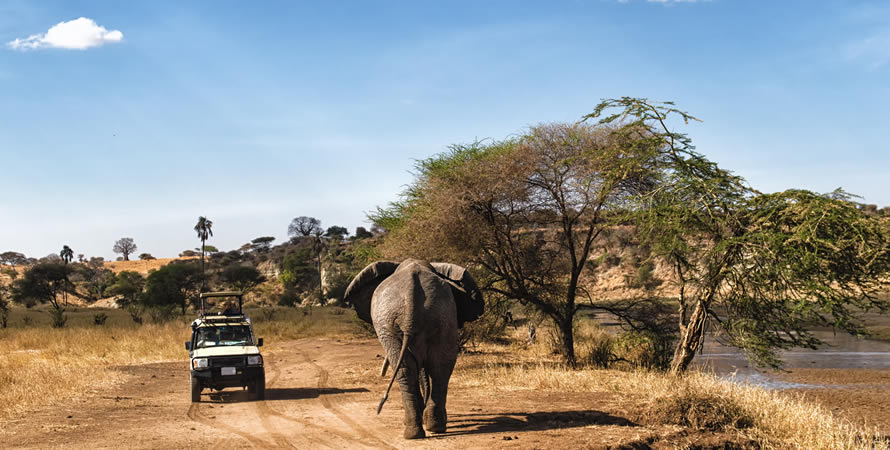
Conclusion: The Superiority of Tanzania for Elephant Safaris
Tanzania’s national parks and reserves provide exceptional possibilities for observing elephants in Africa. Tanzania provides amazing experiences, whether you like to observe vast herds in Tarangire, tuskers in Ngorongoro, migrating elephants in Serengeti, or wild encounters in Selous. Including elephants in your safari itinerary is essential for every traveler planning such an expedition. Their presence embodies the essence of the African environment – majestic, formidable, and profoundly evocative.
Are you prepared to observe elephants in Tanzania?
Organize your safari today to observe these magnificent giants in their natural environment. A meticulously crafted schedule by a reputable tour operator will guarantee that you experience not only elephants but also the finest aspects of Tanzania’s wildlife.