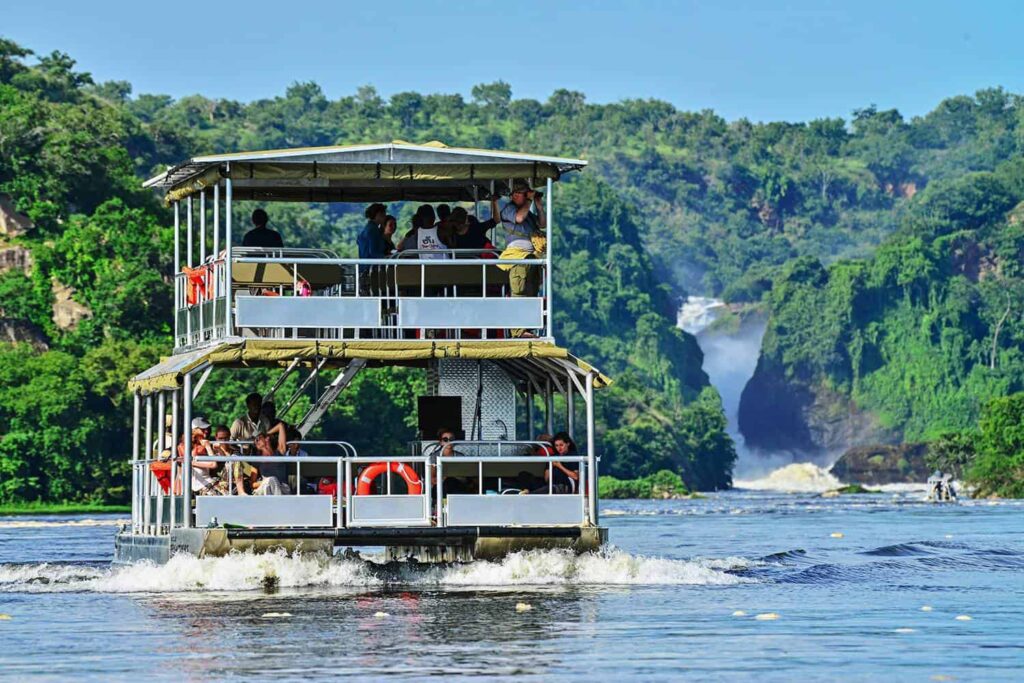
Murchison Falls National Park
A comprehensive reference to exploring Murchison Falls National Park, the largest conservation area in Uganda. This remarkable park is located in northwestern Uganda, at the northern boundary of the Albertine Rift Valley, and is part of the Murchison Falls Conservation Area, which includes the Karuma Falls Wildlife Reserve, the Bugungu Wildlife Reserve, and this vast park.
This independent travel guide encompasses the Victoria Nile extending to the Karuma Bridge and Lake Albert, along with the collaboratively managed Bugungu and Karuma Wildlife Reserve, as well as the Budongo Forest and Kaniyo Pabidi Ecotourism Site.
This guide contains comprehensive travel information including activities, destinations, attractions, maps and guides, accommodations, as well as tips and guidance. This resource provides comprehensive information for planning a safari to Murchison Falls National Park and its surrounding regions. This directory provides current information on attractions, accommodations, dining establishments, retail venues, nightlife options, travel advice, and further resources.
Reasons to Visit Murchison Falls National Park
Murchison Falls National Park is recognized as one of the greatest conservation areas and a premier destination for safaris in Uganda. The Park is among the oldest in Uganda and was designated a national park in 1952. The park has hosted numerous distinguished visitors, including statesmen such as Sir Winston Churchill, who described it as the Kew Gardens in his book, My African Journey.
The park encompasses the magnificent Murchison Falls, along with a diverse array of remarkable landscapes, natural attributes, and flora and fauna groups.
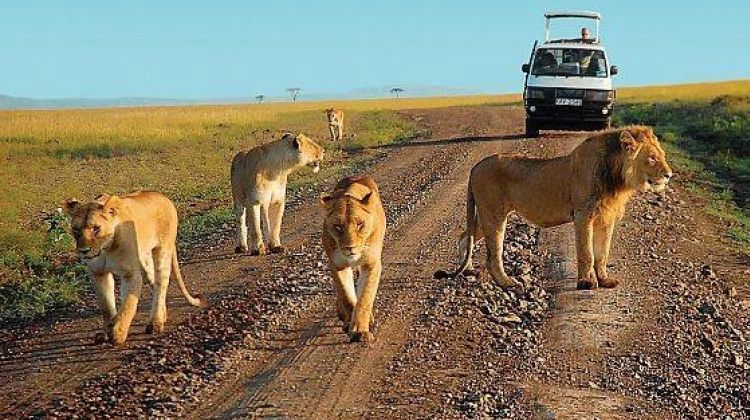
This national park is the largest conservation area in Uganda, including a diverse array of species, including lions, leopards, giraffes, crocodiles, and hippos.
This book provides comprehensive information necessary for planning a safari to Murchison Falls National Park, including details on the park, transportation, maps, and activities available. You are certain to uncover something very unforgettable.
Attractions in Murchison Falls National Park
The Murchison Falls Conservation Area is renowned for its exceptional visual beauty and distinctive biodiversity. The national park is abundant in elephants, buffaloes, giraffes, chimpanzees, various antelope species, lions, leopards, and the Nile, which harbors one of Africa’s most concentrated populations of hippos and crocodiles, along with a remarkable diversity of water birds, including the world’s most accessible wild population of the rare shoebill stork.
Wildlife
Murchison Falls National Park hosts around 76 species of mammals and more than 450 species of birds. The park is home to several huge creatures, including hippos, elephants, Rothschild’s giraffes, buffaloes, Uganda Kob, hartebeests, and lions. The park features a diverse array of primates, with more than 800 chimpanzees, olive baboons, black-and-white colobus monkeys, red-tailed monkeys, and blue monkeys.
Birds
Murchison Falls National Park is an avian paradise, boasting over 450 bird species for ornithologists. The Nile corridor hosts aquatic avifauna, including the rare shoebill stork, alongside other species like as the Goliath heron, grey-crowned crane, enormous kingfisher, and African jacana. Additional noteworthy species comprise the Abyssinian ground hornbill, malachite kingfishers, and the black-billed barbet. The park is an excellent location for both novice and seasoned birdwatchers.
Activities in Murchison Falls National Park
A plethora of activities will render your stay unforgettable. These activities encompass avian observation and wildlife gazing. The boat excursion around Lake Albert will provide an opportunity to observe several bird species, including shoebill storks. Locations such as Rabongo Forest and Budongo Forest serve as venues for chimpanzee tracking. The well-maintained roads will enhance the game drive experience for tourists, resulting in lasting memories.
While game viewing is the primary allure, particularly in the northern region of the River Nile, numerous other adventures await within the park, including the appreciation of the picturesque Murchison Falls, boat excursions along the Nile River, hiking to the summit of the Falls, chimpanzee tracking in Budongo Forest and Kaniyo Pabidi, birdwatching, and additional activities. The park is accessible year-round, although the majority of visitors prefer to partake in a safari during the optimal visiting periods. Scenic drives traverse the area, and camping is both feasible and gratifying.
If you desire to engage in greater physical activity or wish to explore a new outdoor pursuit, there are qualified tour guides authorized to operate within the park who will guarantee your safe exploration of its remarkable features.
Numerous methods exist to explore the park, whether through a planned Uganda safari or by traversing it via car, boat, or on foot.
Murchison Falls National Park
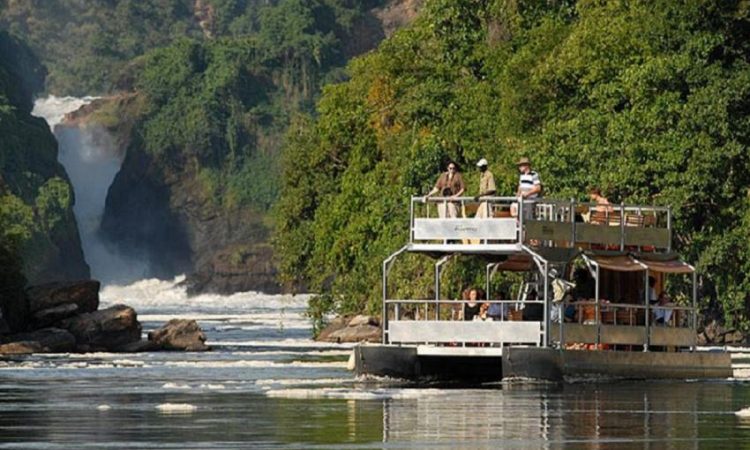
Considering embarking on a wildlife trip in Uganda? Murchison Falls National Park must be the primary destination of choice! This national park in Uganda safeguards a substantial area of unspoiled African savannah, encompassing some of the most sought-after wildlife on the continent. The park, divided by the formidable Nile River, is called after the spectacular Murchison Falls, where the world’s longest river forcefully cascades through a narrow fissure in the Rift Valley escarpment, plunging into a turbulent pool 43 meters below.
Murchison Falls National Park is situated at the northern terminus of the Albertine Rift Valley, where the prominent Bunyoro escarpment converges with the expansive plains of Acholiland. The park is among Uganda’s oldest conservation zones. It was first designated as a wildlife reserve in 1926 to safeguard a savanna that Winston Churchill characterized in 1907 as ‘Kew Gardens and the zoo united on a limitless scale’.
Size
Murchison National Park is the largest national park in Uganda, encompassing 3,840 square kilometers. It borders a segment exceeding 100 kilometers of the Victoria Nile.
Explore Murchison Falls National Park
Murchison Falls has hosted numerous distinguished international tourists. In 1907, Winston Churchill traversed the Nile corridor by hiking, boating, and bicycling to the Falls. In 1909, he was accompanied by Theodore Roosevelt on a hunting trip that, adjusted for inflation, amounted to an extraordinary US$1.8 million.
Boat Safaris and Aquatic Ecosystems
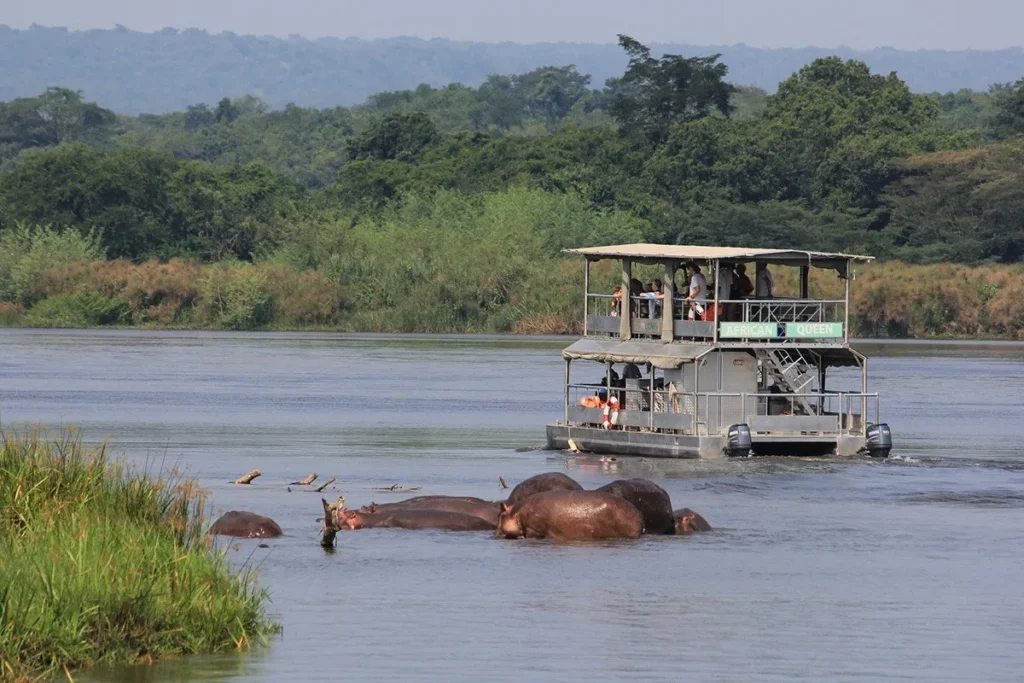
The segment of the Nile traversing Murchison Falls National Park offers remarkable wildlife observation prospects. Boat safaris on the river provide proximate observation of elephants, hippos, and avian species that inhabit the shoreline. The delta, at the confluence of the Nile and Lake Albert, constitutes a significant habitat. It functions as a feeding habitat for fish and a premier site for seeing the shoebill, a rare and highly specialized wetland avian species.
Birdlife and Wetland Importance
Murchison Falls National Park, home to approximately 450 documented bird species, is essential for avian study and conservation efforts. The park’s varied ecosystems, comprising riverine habitats, papyrus swamps, and savannah grasslands, each sustain unique avian species. African fish eagles, ground hornbills, and saddle-billed storks are frequently sighted, whereas the wetlands draw migratory species reliant on seasonal water variations.
Attractions in Murchison Falls National Park
Murchison Falls
Murchison Falls is defined by a perpetual conflict between rock and water. The streams forcefully constrict through a tight gorge, dispersing misty droplets in a 50m radius. This generates a perpetual rainbow over the battlefield and produces an incessant roar. From Baker Point on the southern side, one may observe the Nile bifurcating into the diminutive Uhuru Falls, formed in 1962 when the river overflowed its banks.
Nile River
A boat excursion down the Nile to the base of Murchison Falls offers a gratifying experience for nature enthusiasts, as the northern bank is abundant with diverse animals, avifauna, and reptiles. Guided nature hikes along the northern and southern banks provide a pleasant exercise, and sport fishing is also feasible in this area. Rafting will commence in 2012.
Nile-Lake Albert Delta
This expansive, serene body of water, where the placid Victoria Nile converges with Lake Albert, is a significant location for ornithologists. The papyrus-lined banks teem with avian species, including Goliath Herons, Great Egrets, and African Fish Eagles. The uncommon Shoebill is the most coveted species in this area.
Buligi Game Tracks
The Buligi trails, located between the Victoria and Albert Niles, are the most frequented safari site in Murchison Falls National Park. Measuring approximately 120-170 kilometers in length, they traverse open savannah grassland, woodland, acacia, and riverine vegetation. The majority of the park’s wildlife can be observed here, particularly during early morning and early evening excursions.
Paraa
Paraa, signifying the abode of the hippopotamus in the indigenous Luo language, serves as the tourism center of the park. All access roads to the park converge at this point, where the northern and southern banks are connected by a passenger ferry, and several lodgings are situated nearby. A museum and gift store are located on the north bank, where the majority of wildlife drives, launch excursions, and nature walks begin.
Karuma Falls
The Karuma Falls are situated in Chobe, in the northeastern region of the park. The thundering waterfalls on the Victoria Nile consist of a sequence of natural rock formations that induce rippling waters, resulting in a white, frothy look. This location is perfect for sport fishing.
Kaniyo Pabidi Forest
Located in the southern region of Murchison Falls Conservation Area, this woodland environment is home to black-and-white colobus monkeys, blue monkeys, olive baboons, and a habituated population of chimpanzees that may be tracked. Elephants, buffaloes, lions, and leopards are all common visitors. A variety of woodland birds can be observed here, including the chocolate-backed kingfisher, white-thighed hornbill, and Puvel’s illadopsis, which is endemic to East Africa. Kaniyo Pabidi offers a camping, cottage lodging, forest trails, and exceptional birdwatching opportunities.
Rabongo Forest
Encompassed by savanna and spanning merely 4km², Rabongo Forest is regarded as a haven for ornithologists due to the presence of endangered species. Rabongo is optimal for educational excursions, offering opportunity to identify fauna, avifauna, medicinal flora, and arboreal species. Visitors may camp and partake in picnics along the Wairingo River for relaxation.
Fauna in Murchison Falls National Park
Murchison Falls National Park hosts a diverse array of flora and fauna. The park’s most prevalent fauna comprises African elephants, lions, leopards, buffaloes, Nile crocodiles, hippos, waterbucks, warthogs, Uganda Kobs, hartebeests, Rothschild giraffes, and primates such as olive baboons, blue monkeys, red-tailed monkeys, and chimpanzees, totaling approximately 800 individuals residing in Kaniyo Pabidi and Budongo forests. Additionally, notable species of birds include the shoebill stork, grey crowned cranes, blue-headed coucal, swamp flycatcher, squacco heron, black-billed barbet, silver bird, red-throated bee-eater, giant and malachite kingfishers, eastern grey plantain eater, piapiac, various weaver birds, white-browed sparrow weaver, speckle-fronted weaver, African quail finch, and Denham’s bustard, among others.
Wildlife Populations in the Park
Wildlife populations have significantly rebounded from the poaching crisis of the 1980s; in the verdant borassus grassland north of the Nile, elephants, buffalo, giraffes, and other antelope are frequently observed during game drives, while lions are increasingly sighted.
Rabongo Forest, located in the southeast, is inhabited by chimpanzees and various other rainforest fauna.
The Nile harbors one of Africa’s most concentrated populations of hippos and crocodiles, along with a remarkable diversity of waterbirds, including the world’s most readily accessible wild population of the endangered shoebill stork.
Wildlife and Predatory Dynamics
Murchison Falls National Park sustains a substantial number of large herbivores, such as elephants, buffalo, giraffes, and Uganda kob. These animals constitute the basis of the park’s predator-prey dynamics, supporting populations of lions, leopards, and spotted hyenas. The riverbanks serve as a crucial habitat for Nile crocodiles and host one of Africa’s largest populations of hippos, hence enhancing the park’s ecological complexity.
Itinerary Organizer
Organizing a safari in Murchison Falls National Park necessitates acquiring knowledge to facilitate educated decision-making. Let us commence the planning of a safari in Murchison Falls National Park to ensure a seamless and enjoyable experience upon your arrival.
Get informed on
Optimal activities at Murchison Falls Conservation Area.
Essential Attractions in Murchison Falls National Park
Optimal visitation periods – What are the prime times to visit the park
Safaris and Excursions – Types of safaris to consider – Camping Safaris, Wildlife Safaris, Fishing Safaris, Bird Watching Excursions, etc.
Accommodation – Options for lodging during a safari – Budget Safari Lodges, Mid-Range Lodges, Luxury Safari Lodges – In-Park Accommodation and Out-of-Park Accommodation
Accessing Murchison Falls National Park – Guided Safaris Versus Independent/Self-Drive Tours
Location and Directions
This is situated in the northern extremity of the Albertine Rift Valley, traversed by the formidable Victoria Nile, which originates in the western part of the park and empties into Lake Albert to the east.
Getting to Destination
Numerous methods exist to get Murchison Falls National Park.
Travel by Air: You may book a flight to Pakuba Airstrip with Aero Link or Bar Aviation.
The Park is accessible via air charter flights. Paraa and Rabongo has airstrips capable of accommodating light aircraft with a maximum capacity of six seats.
Access to the park is also available by car.
The journey by road from Kampala to Masindi takes three hours, covering 217 km on tarmac and 40 km on high-grade murram, followed by an extra two hours (97 km) from Masindi to the Falls on murram. A four-wheel drive vehicle is recommended due to the poor condition of the Masindi-Paraa road.
The entrances to Murchison Falls National Park
The park has several entrances for access.
Strategize in Advance Notable entrances include Kichumbanyobo Gate and Mubako Gate in the southern region of MFNP, Wankwar Gate and Tangi Gate in the northern region, as well as Chobe Gate.
Park Charges
The entrance charge for Murchison Falls National Park is US$45 for international visitors. Entrance fees are to be settled at the entrance gates via Mobile Money or credit card payment.
Organized Tours
Organized fly-in and overland excursions to Murchison Falls National Park are available. These excursions are provided by local tour operators featured on this website. A budget group safari can be booked from Kampala for as little as US$400.
Self Drive
A number of people choose self-guided tours to Murchison Falls National Park. You may acquire a rental vehicle from Car Rental Uganda to independently explore the park.
What is the optimal period for visiting Murchison Falls Park?
The park is accessible throughout the entire year. The trend of African safari enthusiasts impacts the park. The park experiences increased visitation from vacationers between June and October, as well as from December to March.
Murchison Falls National Park is frequently incorporated into safari itineraries that feature prominent Ugandan parks. It is frequently integrated with other renowned adventure activities, like as gorilla safaris in Bwindi and Mgahinga, chimpanzee tracking in Kibale Forest, and wildlife safaris in Kidepo and Queen Elizabeth National Park. While the majority of tourists in Uganda engage in gorilla trekking at Bwindi Impenetrable Forest and Mgahinga Park, Murchison Falls Park attracts the greatest influx of visitors from June to September and December to March.
Embarking on a safari at Murchison Falls National Park during the dry season facilitates superior animal observation compared to the rainy months. It is advisable to meticulously arrange your trip to ensure the observation of all desired wildlife.
Commence the organization of your forthcoming Uganda safari today with our complimentary trip planning resources, and receive current travel information, news, and safari offers from our esteemed travel partners.
Accommodation options
Accommodation options include campgrounds, lodges, hotels, and guesthouses. Several of these structures are constructed atop the waterfalls. They possess superior eco-friendly facilities. Economical lodging options are accessible for budget-conscious guests, with Kaniyo Pabidi Camp and Red Chilli Rest Camp being the most appropriate choices. Tourists that favor upscale accommodations include Nile Safari Camp, Paraa Safari Lodges, and Sambiya River.
If you wish to stay in Masindi, there are upscale accommodations available, including Masindi Hotel, Court View Hotels, Budongo Eco Lodge, Fort Murchison, Ziwa Rhino Sanctuary, Nile Safari Lodge, and Chobe Safari Lodge, all offering exceptional services. Bwana Tembo Safari Camp, Murchison River Lodge, Fort Murchison, Murchison River Lodge, Global Village Guest House.