Mgahinga Gorilla National Park
Mgahinga Gorilla National Park, Located in southwestern Uganda, Mgahinga National Park is notably one of the few exceptional safari sites. Remarkably, it is a distinguished location where gold converges with silver. This park encompasses the verdant slopes of the three Virunga Mountain ranges, spanning approximately 33.7 square kilometers, so rendering it the smallest park in Uganda.
Mgahinga Gorilla National Park, exceptionally suited for gorilla excursions, is situated in the remote southwestern region of Uganda, adjacent to Rwanda to the south and the Democratic Republic of Congo (DRC) to the west, encompassing an area of 33 square kilometers.
Located 14 kilometers from Kisoro town, Mgahinga Park encompasses the slopes of the three northernmost Virunga Volcanoes: Mount Muhavura (4,127 m), Mount Gahinga (3,474 m), and Mount Sabinyo (3,645 m). The three nations, Uganda, Rwanda, and the Democratic Republic of Congo, each manage their respective segments of the Virunga Mountains: Mgahinga National Park for Uganda, Volcanoes National Park for Rwanda, and Virunga National Park for the Democratic Republic of Congo. The three parks collectively constitute the Virunga Conservation Area (VCA), encompassing an area of 434 square kilometers, of which Mgahinga comprises 33.7 square kilometers, representing 8% of the VCA. Mgahinga Park is wholly situated in Bufumbira County, Kisoro District.
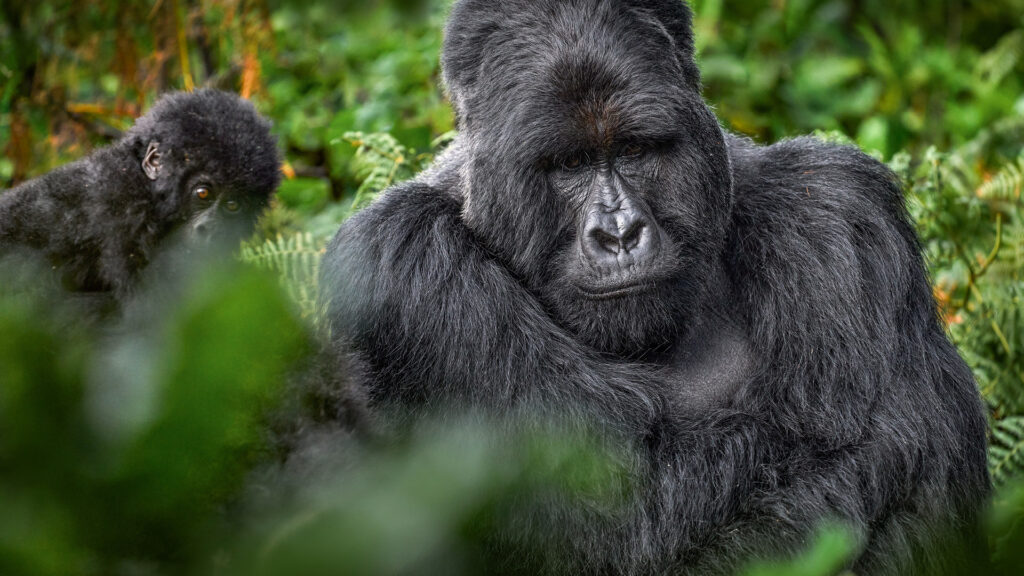
Mgahinga Gorilla National Park comprises fairly forested inclines of three extinct volcanoes. The huge cones of the Virunga volcanoes dominate the landscape and become evident as one approaches. Upon arriving to the park, you can have a substantial overview of the area by ascending the viewpoint, located about 15 minutes from Ntebeko Gate. The park possesses significant environmental value, as throughout the climatic fluctuations of the Pleistocene ice ages, mountains such as the Virunga served as refuges for mountain flora and fauna that migrated up and down the slopes in response to temperature variations. The Virungas are home to a significant diversity of species, including almost fifty percent of the world’s critically endangered mountain gorillas.
Attractions in Mgahinga National Park
Mgahinga National Park provides sanctuary to 76 mammal species, including the endangered mountain gorillas, which constitute a population of 1,004 individuals currently extant on the planet. Additionally, there exist elephants, buffaloes, golden monkeys, spotted hyenas, black-fronted duikers, enormous forest hogs, bushbucks, and more than 115 avian species.
Virunga Volcanoes
It constitutes a segment of the formidable Virunga Conservation Area (VCA), which also includes Volcanoes National Park in northeastern Rwanda and Virunga National Park in eastern DR Congo. Mgahinga Gorilla National Park spans elevations from 2227 meters to 4127 meters, encompassing the Virunga Massifs, including Gahinga, from which it derives its name at around 3474 meters, Muhabura at 4127 meters, and Sabyinyo volcano at 3645 meters. This park was designated as a national park in 1991 primarily to provide sanctuary for its unique natural wonders.
Mount Sabyinyo (3,669 meters)
The old man’s teeth, like to an elderly individual, have been eroded by time, much like the weathered summit of Mt. Sabyinyo. Observing the ‘Old Man’s Teeth’ atop Mt. Sabinyo constitutes an exceptional exploration. This volcano features three formidable summits to ascend. Ascending the mountain involves traversing a ridge on the eastern flank en route to the summit. To proceed, the ascent to Peak 11 entails traversing a ridge with stunning descents into the gorges of Rwanda and Uganda, a dual experience to be attained and appreciated here. The ascent to Peak 111 is strenuous, featuring multiple ladders and much climbing. Your hands must become soiled on the journey to Peak 111! Upon reaching the summit, you will find yourself in Rwanda, the Democratic Republic of Congo, and Uganda, a truly remarkable trifecta of experiences. The expedition requires around eight hours for a round trip to traverse the 14 km distance.
Mount Gahinga (3,474 meters)
En route to the park, you may encounter small stone heaps in the garden fields referred to locally as ‘Gahinga.’ Mount Gahinga is far larger than the ordinary ‘Gahinga’; nonetheless, its proximity to Mount Muhavura renders it visually diminutive. A six-hour round trip traverses an exemplary pure bamboo wilderness. Mt. Gahinga once included a Crater Lake at its summit, but with time, it has transformed into a thriving marsh located 8 km away.
Mount Muhavura (4,127 meters)
This volcano is clearly visible from several locations in Kisoro, serving as a landmark. The iconic conical mountain offers some of the finest vistas in Uganda. The majority of the trekking route features a rocky terrain surrounded by grasslands and low flora. Upon reaching the summit of Muhavura, hikers are afforded a view of the Virunga volcanoes, Lake Edward in Queen Elizabeth National Park, Bwindi, and the peak of the Rwenzori Mountains. The trekking activity requires approximately 8 hours for a round journey, spanning 12 kilometers. It is recommended to establish a base camp at the Muhavura campsite the night prior to hiking, as the location lacks facilities; therefore, one must bring a tent, water, food, and sleeping gear, among other necessities.
Activities in Mgahinga
Although it is the smallest, it is the most picturesque of all Uganda’s parks. The park is elevated in the clouds and is one of the three Virunga Parks. This region is renowned for gorilla trekking, volcanic mountaineering, and golden monkey tracking, making it the premier choice for an adventurous safari in Uganda.
Gorilla trekking
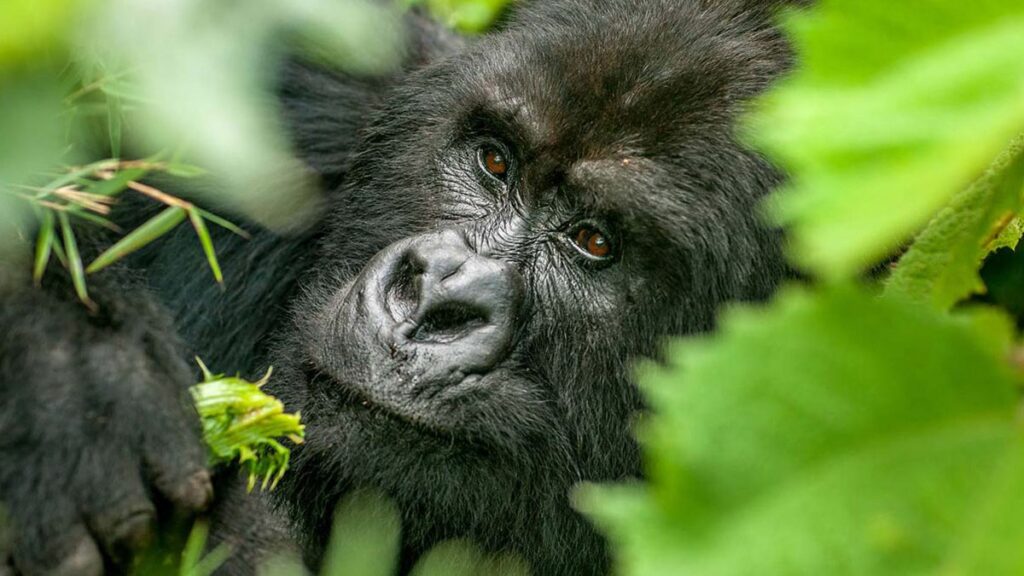
For individuals seeking less congested gorilla treks, Mgahinga National Park is undoubtedly the optimal choice. It is Uganda’s secondary gorilla location for mountain gorilla tracking. A gorilla safari in this park commences at Ntebeko with a morning briefing on the guidelines to adhere to while traversing the bush in pursuit of a group of mountain gorillas. Nyakagezi is the sole group that has been habituated and is fully prepared for tourism reasons regarding guest encounters. Similar to other locations, only eight persons are permitted to observe these animals in Mgahinga National Park, with permits priced at US$700 per individual. Trekking to observe mountain gorillas in this park may take between 2 to 6 hours or longer, contingent upon the proximity of the animals, the characteristics of the environment, and your climbing pace.
Hiking
From Mgahinga National Park, trekkers can ascend to Mt. Sabinyo at 3,645 meters, Mt. Gahinga at 3,474 meters, and Mt. Muhavura at 4,127 meters above sea level.
Exploring the Garama Cave
This cave was originally inhabited by the cunning Batwa warriors who engaged in conflict with their neighbors, the Bantu. The distance from the park headquarters to the cave entrance is 3 km, requiring around 4 hours to traverse. Your guide will familiarize you with Batwa history and demonstrate their lifestyle and struggles within the cave. The cave, measuring 342 meters in length and 14 meters in depth, is currently inhabited by bats.
The viewing deck is approximately 800 meters from the park entrance. From the summit, you will attain an enhanced perspective of the Park and its surrounding regions. A guide is deemed unnecessary in this context, and the action incurs no cost. Exhibiting panels at the hilltop will provide a wealth of information regarding the visible landscape.
The Border Trail is a complimentary five-hour hike that initially leads towards Sabinyo. The path ascends to the base of Sabinyo for a period, traversing through exquisite montane forest before veering towards the Congo. During your journey, you will observe a spectacular vista of Sabinyo’s gorge and summits. Upon entering Congo, traverse the international border and return to the Park Head offices, an excellent location for avian observation. The two rest huts along the route provide as good locations for a respite. Carefully observe the golden monkeys and elephants during your return. The distance of the hike is 10 kilometers.
Birdwatching in Mgahinga
Mgahinga Gorilla National Park is home to approximately 115 avian species, including several prevalent in the East Congo Montane area, such as the Ibis, Whydah, Speckled Mousebirds, Fire Finch, Stonechat, Grey-Capped Warbler, Waxbills, and Yellow-Vented Bulbul. In the Virunga Conservation Area, more than 295 species are present in the Albertine Rift Afromontane region, constituting 59% of the total known common species. Consult with Park Management for a guide to enhance your birdwatching experience, and ensure you bring all necessary birding equipment, including binoculars.
Free Birding
Complimentary bird watching is available at the park’s periphery upon request. The guides will depart between 5 and 6 PM if you make an early reservation by 10 AM on the day you wish to observe birds. Select your preferred walking direction or unwind at the campsite. A leisurely stroll along the buffalo wall towards the Congo traverses a wetland habitat inhabited by Ibis, Whydah, Speckled Mousebird, and Fire Finch. Stonechat, Grey-Capped Warbler, Waxbills, and Yellow-Vented Bulbul are prevalent at the campground. Consult the information regarding the optimal locations and proceed at your leisure. The avian species at Semuliki comprise the Broad-billed Roller, Green Wood-hoopoe, African Grey Hornbill, African Moustached Warbler, predatory Red-necked Falcon, Black-winged Red-Bishop, White-winged Widowbird, Fawn-breasted Waxbill, Double-toothed Barbet, Yellow-throated Leaflove, Green-backed Eremomela, Piapiac, Black-chinned Quail-Finch, Red-shouldered Cuckoo-shrike, and Western Violet-backed Sunbird, with the enumeration ongoing. Proceed at your own pace, as birdwatching does not require haste.
Tracking golden monkeys
Mgahinga National Park is notable as the location where gold intersects with silverback. Golden monkey tracking is a unique primate expedition available in this park. Permits for this expedition are priced at $50 per individual, whereas participation in golden monkey habituation requires a permit costing $100.
Nature walks
Mgahinga National Park is ideal for nature enthusiasts, offering rewarding vistas of its verdant flora, bamboo forest, Rugezi marsh, and panoramic views over the farmlands and Lake Mutanda.
Cultural interactions
Visit the Batwa village to experience Africa’s distinctive customs. A visit to this community provides an opportunity to engage with the Batwa and discover their remarkable cultures and traditions.
Accommodations in Mgahinga National Park
The prominent safari hotels offering visitor accommodation on a Uganda safari in Mgahinga National Park are
Clouds Mountain Gorilla Lodge is located in the southern section of Bwindi Impenetrable Forest National Park, adjacent to the Nteko ridge.
Nkuringo Safari Lodge, located along the banks of Lake Mutanda near Mgahinga National Park;
Mount Gahinga Lodge (Opulent)
Mount Gahinga Lodge is situated at the entrance of Mgahinga National Park, providing an optimal location for tracking mountain gorillas and golden monkeys, as well as participating in exhilarating volcano mountaineering. It includes an open fireplace, bar, restaurant, laundry service, outdoor seating area for birdwatchers and native flora, solar energy, and a sunroom with a view of the volcanoes.
Amajambere Iwacu Community Camp (Financial Plan)
This camp is located near the entrance of Mgahinga National Park, approximately 12 kilometers from Kisoro district and 505 kilometers from Kampala. It provides breathtaking vistas of the eight Virunga Massifs, including Gahinga, Sabyinyo, and Muhabura. The camp includes five bandas, two of which serve as dormitories.
Mucha Hotel Kisoro (Mid-range)
This is located on the banks of the River Mucha, offering stunning views of banana trees and other vegetation. It is located six kilometers from Kisoro town and offers breathtaking vistas of volcanoes and the Mucha River. It comprises 10 en suite bedrooms, equipped with single, double, and twin beds. It features a restaurant, bar, garden area, lounge, and other additional amenities.
Plan your trip.
Optimal Timing for Visiting Mgahinga Gorilla National Park
When contemplating a safari in this park, the dry and wet seasons are the two critical factors to consider. The rainy season typically occurs from March to May and October, marked by substantial rainfall, whereas the dry season spans from June to September and December to February. The dry season is generally more desirable due to its less rainfall, resulting in a drier ecosystem that enhances gorilla trekking and various safari activities within the park.
Directions to Mgahinga National Park
Mgahinga National Park is accessible by both road and air. The travel by car will require approximately 8 to 10 hours, commencing from either Kampala or Entebbe. Proceed along the Kampala-Kabale highway and subsequently access the Ntebeko entrance gate. An alternative is to fly from Entebbe Airport or Kajjansi airfield to Kisoro airstrip, from whence you can conveniently drive to Mgahinga National Park.