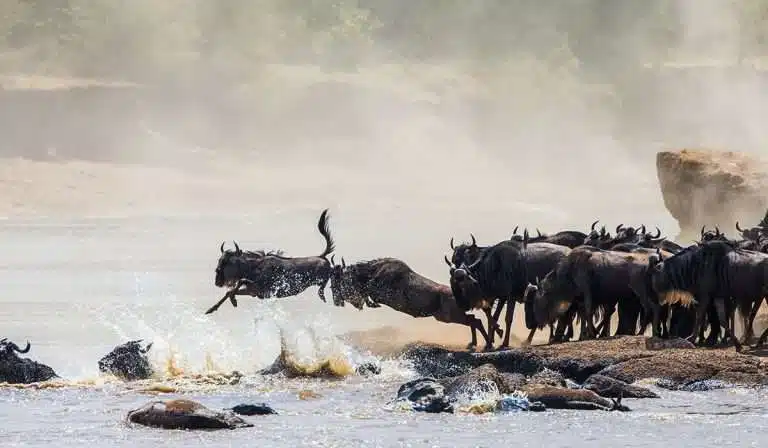
Mbalageti River in Serengeti National Park
The Mbalageti River, located in the western region of Serengeti National Park, is a significant natural feature. The river derives its name from the Masai term Mbalageti, signifying seasonal. The Mbalageti River, as its name implies, transports water only during specific periods of the year, predominantly during and following the rainy season.
The Mbalageti River Valley constitutes a natural barrier in the western Serengeti. This valley is pivotal during the seasonal migration of fauna. Wildebeests are required to traverse the Mbalageti River while migrating north from Serengeti National Park to the Masai Mara National Reserve in Kenya. These crossings are crucial to the broader animal migration cycle, drawing both predators and observers.
The Mbalageti River, when active, travels westward and ultimately discharges into Lake Victoria. Lake Victoria is the largest freshwater lake globally and functions as a significant water source for regional fauna. In the dry season, Lake Victoria and its associated water systems sustain the fauna residing in proximity to the western Serengeti.
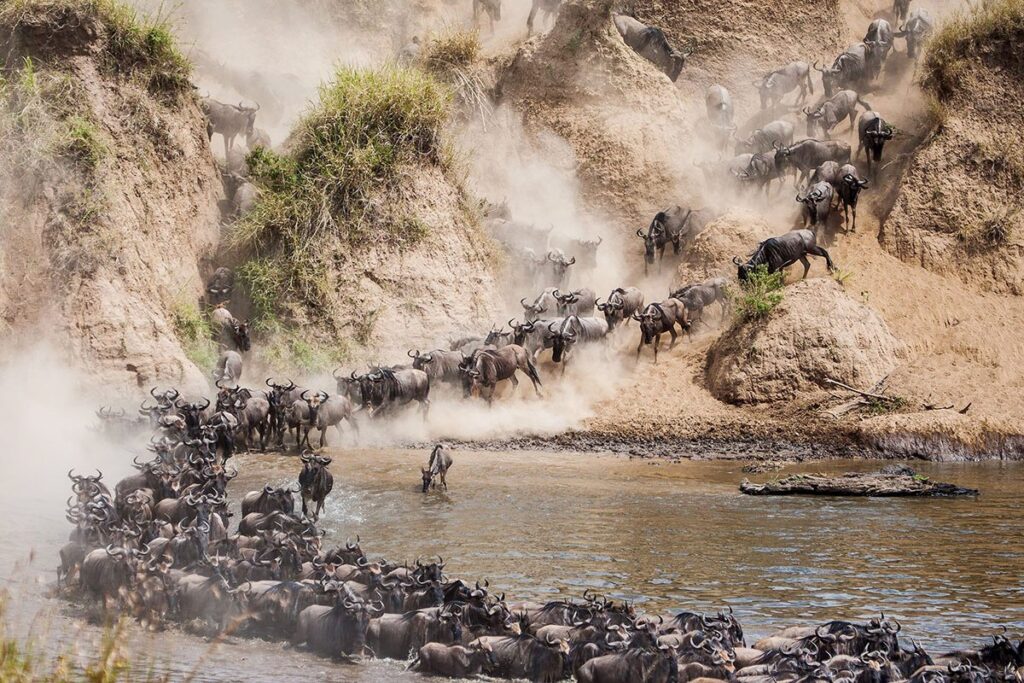
The banks of the Mbalageti River in Serengeti National Park sustain diverse wildlife species. Fauna are attracted to the river valley due to the availability of water, shade, and foraging grounds. Topi antelopes are frequently observed foraging along the riverbanks. Primates are frequently located in arboreal environments adjacent to the river, whilst felines such as lions and cheetahs traverse the adjacent open terrains in pursuit of prey.
Giraffes and elephants utilize the Mbalageti River region as a component of their foraging pathways. Elephants across the river in pursuit of water and vegetation. Giraffes feed on foliage from trees situated along riverbanks. Numerous additional antelope species inhabit this region, utilizing the river valley for refuge and sustenance.
The Mbalageti River in Serengeti National Park sustains a robust wildlife ecosystem by supplying seasonal water and facilitating natural migration routes. Despite the river’s desiccation, the valley continues to serve as a significant thoroughfare for wildlife. The Mbalageti River is a significant landmark in the western Serengeti and a vital destination for safaris in Serengeti National Park.