Dutwa Plains: The Unconquered Heart of the West
The Dutwa Plains, situated in the northern part of the Western Corridor, constitute a huge and rough stretch of quintessential African savanna. Dutwa, situated between the Ruwana Plains and the Grumeti River, exemplifies one of the most isolated and genuine areas of the Serengeti. The Dutwa Plains, distinguished by expansive grasses, dispersed acacia woods, and concealed seasonal pans, provide a safari experience marked by tranquility, vastness, and unrefined nature.
Dutwa offers an opportunity to experience the Serengeti, which has remained wide, untamed, and breathtakingly magnificent for millennia, for those wishing to evade the congested major loops.
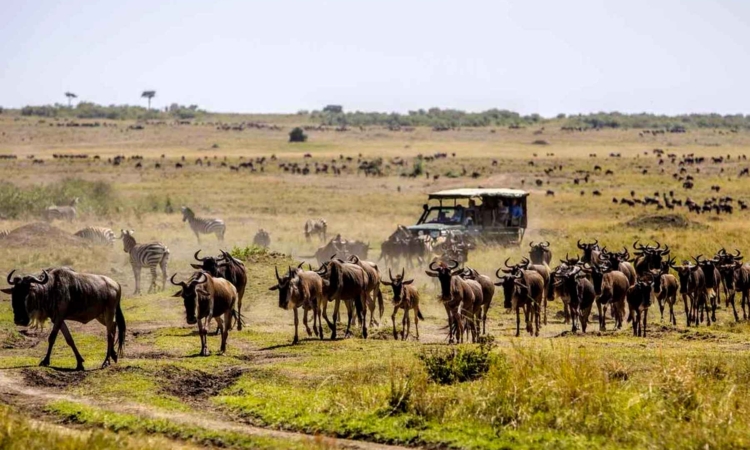
The Great Migration’s Quiet Transit
Between May and July, the Dutwa Plains experience the continuous progression of the Great Migration. As the herds migrate northward along the Western Corridor, they traverse the Dutwa grasslands in pursuit of the superior pasture that accompanies the rains. In contrast to the more crowded sections of the park, observing the migration at Dutwa like an exclusive performance. Herds stretch to the horizon, devoid of any vehicles, facilitating a profound connection with the natural environment.
Resident Game and Predator Equilibrium
The Dutwa Plains have a substantial population of indigenous species. The expansive grasslands host substantial herds of buffalo, eland, and the agile Topi, which are characteristic of the Western Corridor. The abundance of herbivores guarantees that the region’s predators are adequately nourished and vigorous. Multiple resident lion prides traverse the plains, while the dispersed acacia groves offer ideal concealment for leopards. Hyenas and jackals are often observed, especially in the vicinity of migrating herds.
| Feature | Details |
|---|---|
| Character | Remote, wild, and sparsely visited |
| Topography | Rolling grasslands and open acacia savanna |
| Migration Role | Key transit and grazing zone (May – July) |
| Wildlife Focus | Buffalo, Eland, Topi, Lion, Leopard |
Ecology and Hidden Marvels
The ecology of Dutwa represents a captivating interaction among the soil, grass, and seasonal changes. The area is recognized for its “black cotton soil,” which transforms into a vivid emerald green post-rainfall and shifts to a coarse, fissured grey during the arid season. Seasonal pans, or small waterholes, punctuate the landscape, drawing diverse avian species and smaller mammals such as the Bat-eared Fox and the Serval cat. It is a location that rewards anyone who meticulously observe the finer aspects of the savanna.
Safari Insights: The Pleasure of Solitude
A safari in the Dutwa Plains epitomizes the opulence of vastness. The road network is less developed than in the central regions, promoting a more adventurous and inquisitive approach to game driving. This region allows for hours of uninterrupted observation of a single lion pride or a herd of elephants. The intense sense of remoteness here renders it a preferred destination for experienced safari enthusiasts and photographers.
Best Time to Visit
Although the migration occurs most intensively in May, June, and July, the Dutwa Plains offer a gratifying experience throughout the year. The dry season (July to October) provides optimal visibility and opportunities for seeing resident wildlife around the remaining water sources. The green season (November to May) offers exceptional opportunities for birdwatching and picturesque scenery; nevertheless, certain regions may become inaccessible following intense rainfall due to the black cotton soil.