Lake Mburo National Park
Welcome to Lake Mburo National Park, the smallest national park in Uganda. This book contains all the essential information required to organize a safari to Lake Mburo Game Park, Uganda’s most accessible protected area. Discover essential information regarding attractions, activities, tours, and experiences to facilitate your trip planning to this remarkable savanna national park.
Situated in the region of Uganda characterized by expansive acacia woodlands, Mburo has distinctly different species compared to other reserves. If you are organizing animal safaris, birding excursions, nature walks, boat cruises, or horseback riding in Uganda, this park is the premier destination to explore. If you like to experience exceptional game viewing, consider visiting Lake Mburo National Park.
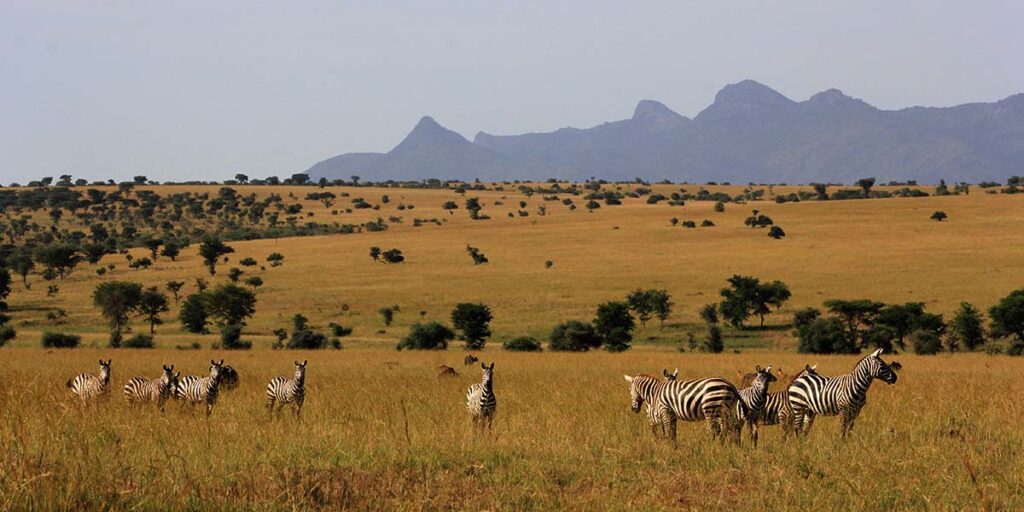
Lake Mburo National Park is the premier location in the country to observe the colossal eland antelope, alongside zebra, topi, impala, and many acacia-associated avifauna.
The five lakes in the park draw hippos, crocodiles, and various waterbirds, while adjacent marshes conceal elusive papyrus specialists, such the sitatunga antelope and the red, black, and yellow papyrus gonalek.
Lake Mburo Tours
Presented are curated Uganda safaris organized by our expert tour operators to optimize your experience in Lake Mburo National Park. These itineraries have been meticulously designed to showcase Uganda at its finest. Lake Mburo, including pleasant lodging, diverse wildlife, and convenient access from Kampala and Mbarara, is an essential trip for those wishing to see Uganda’s natural splendor and dynamic local culture.
Concerning Lake Mburo National Park
Located in the western region of Uganda, Lake Mburo National Park is the country’s smallest savannah national park and the most accessible park from Kampala. Lake Mburo National Park encompasses 370 square kilometers and hosts more than 69 species of mammals and over 350 species of birds, rendering it a natural paradise. at addition to the captivating attractions within the park, there are numerous hotel options that provide guests with unparalleled comfort at their chosen destination.
Location
Located between Masaka and Mbarara in Western Uganda, it is the sole park that encompasses a complete lake. Lake Mburo National Park, characterized by its picturesque and serene landscape, is located amidst undulating hills and expansive green valleys. This picturesque setting includes four other smaller lakes inhabited by impala, eland, waterbuck, klipspringer, zebra, and buffalo.
Lake Mburo is around 240 kilometers from Kampala and merely 30 kilometers from Mbarara, the major town in western Uganda. The park is encircled by four principal districts: Mbarara, Lyantonde, and Isingiro to the north, and Kiruhura. The nearest national park in Uganda, located near the president’s residence in Kiruhura District.

Attractions in Lake Mburo National Park
Lake Mburo National Park is home to three of the five major big five mammals. These are African elephants, lions, and buffaloes. The Park is a small treasure with around 68 kinds of mammals. These encompass zebra, impala, topi, eland, bushbuck, buffalo, warthog, leopard, hyena, and jackal, among others.
Wildlife
The park houses Aardvark, Hyrax, Porcupine, Hippopotamus, Zebra, Pangolin, Warthog, Hyena, Leopard, Buffalo, Civet, Genet, Topi, Eland, Klipspringer, Oribi, Sitatunga, Impala, and Crocodile. The region boasts a remarkable diversity of 357 avian species inhabiting water and acacia savannahs, including the crested crane, the rare shoebill stork, marabou stork, bronze-tailed starling, bee-eaters, and more exotic species such as the Blue Naped Coucal, Bare-faced Go-Away Bird, Nubian Woodpecker, and swamp flycatcher.
Hippopotamuses and crocodiles may be observed foraging during temperate mornings. The adjacent papyrus marshes conceal the exquisite sitatunga, a distinctive antelope characterized by slender, elongated hooves that facilitate movement on swampy terrain.
Exotic viewpoints you may like include male impalas.
Typically surveying their domain from the apex of a substantial anthill, a superb panoramic vista of the lake land area from an elevated perspective, or the observation of locally herded long-horned ankole cattle grazing alongside wild impala and zebra. Remember to go on a wooden Ssese canoe excursion on the lake to observe kingfishers, herons, and other aquatic avifauna; your guide will ensure a safe distance from hippos and crocodiles.
The appealing acacia-studded savannah (256 sq. km) hosts substantial herds of impala, among rare topi, eland, klipspringer, and various other antelope species. Zebras and buffalo also graze in these tranquil pastures.
The lake sustains a remarkable variety of avian species. The diverse habitats of the lakeshore and expansive savannah contribute to a seemingly infinite variety. Observe waterbirds diving for fish, the Marabou Stork, bee-eaters, the audacious Bronze-tailed Starling, and the regal Crowned Crane. Ensure you bring your binoculars. Additional information regarding the fauna of Lake Mburo.
Birds
As prevalent species become recognizable, you will start to observe smaller, less remarkable birds; true connoisseurs appear to derive the greatest enthusiasm from ‘Little Brown Jobs’ (‘LBJs’), which are the most challenging to identify. While numerous birds are widely distributed, some exhibit greater selectivity in their habitat preferences. For instance, the majority of the park’s 310 documented species are ‘generalists’ and can be observed in many locations. There are, however, five avian species that are only found in the forest, along with sixty specialist aquatic birds. Some choose either short or tall grasslands, while others predominantly inhabit forests.
Wildlife on lakeshores and papyrus wetlands
Over 26 species of shoreline and papyrus swamp birds have been documented in this park. Included among them are the Fish Eagle, Pied Kingfisher, African Finfoot, Great White Egret, and Night Heron. For additional information regarding avian species, please reach out to the Park Management. This park features open water birds, lakeshore and papyrus swamp birds, seasonal swamp birds, woodland birds, grassland birds, and forest birds. The avifauna of the Open Water in this park comprises the Pink-backed Pelican, Darter, White Pelican, Yellow-billed Duck, Long-tailed Cormorant, White-winged Black Tern, and Greater Cormorant.
Activities in Lake Mburo National Park
Lake Mburo National Park offers numerous activities. The most favored adventure activities encompass nature walks, game drives, lake cruises, exceptional birdwatching, horseback riding, and other pursuits. The park is among the few highly ranked national parks in Uganda for nocturnal wildlife drives. It also provides distinctive experiences such as foot safaris, quad biking, horseback riding, and cycling.Explore the premier activities in Lake Mburo National Park as stated below;
Wildlife Watching
Game viewing constitutes the primary tourist activity in this park, renowned for its abundant biodiversity. It comprises around 68 distinct species of mammals. The prevalent herbivores include Zebra, Impala, Buffalo, Topi, and Eland, with the rare Roan antelope. Additionally, predators like as leopards, hyenas, and jackals are noteworthy.
Boat cruise
The existence of Lake Mburo within the park is a notable advantage. The lake boasts a diverse array of animal and plant species that can only be observed clearly by taking a boat ride. Crocodiles, hippopotamuses, and avian species such as pelicans, black crakes, herons, cormorants, and fish eagles may be observed, along with the uncommon shoebill stork, all of which will enhance your stay with a sense of pride. The length of each boat tour is up to negotiation.
Guided nature walks
This tiny jewel park is accessible to all tourists wishing to engage in nature walks. The nature walk provides visitors an opportunity to appreciate the natural environment. Visitors have the ability to traverse the circuit at their own pace, accompanied by an armed guide. The trail is presented in a pamphlet available in both English and Runyankole.
Salt Lick
A stroll to the nearby salt serves as a concise summary of the entirety. The strategically positioned wooden hide (observation point) provides an opportunity to observe a minimum of four distinct animal species simultaneously as they consume the saline soil. It is particularly noteworthy because this occurs without the animal’s awareness. Visitors may also traverse to areas of their own selection.
All park walks must be accompanied by an armed park officer.
Rubanga Forest
Arrangements can be made with Park Management to have a Ranger accompany you while exploring this woodland. The Rubanga Forest, however diminutive, is a genuine forest including a closed canopy in certain areas. The prevalent tree is Markhamia platycalyx, characterized by a grey-brown trunk with irregular flaking patches, divided leaves, and yellow blooms adorned with red stripes and spots; it bears extremely long pod-like fruits measuring up to 1.3 meters. Palms, figs, sapium (a tall tree with crimson foliage prior to leaf drop), and the flame tree Erythrina abyssinica are found along the periphery of the swamp.
Bird Watching
First-time visitors to Lake Mburo National Park are captivated by the diversity of huge creatures and vibrant birds. For several individuals, avian species are the most captivating to observe. Lake Mburo National Park in Uganda hosts more than 350 avian species, encompassing both migratory and resident birds. Notable species including the Abyssinian ground hornbill, African fishing eagle, and the uncommon Red-faced Barbet. The avifauna of the park is classified into aquatic, woodland, and savannah species. Prominent birdwatching locations encompass the Warukiri and Miriti marshes, in addition to the roadsides adjacent to Rwonyo camp. The optimal times for birdwatching are in the morning and evening, with peak periods being from April to May and October to November during migratory bird visits. Rubanga Forest is an exceptional site for avid ornithologists, including distinctive avian species.
Organize Your Safari to Lake Mburo National Park
Commence the planning of your forthcoming safari to Lake Mburo National Park.
Where is Lake Mburo National Park
Lake Mburo National Park is located in the Mbarara area, approximately a 3.5-hour journey from Kampala along the Mbarara-Kampala highway. At 13 kilometers past Lyantonde, turn left at Akageti to reach Sanga gate. Both intersections feature clearly marked signposts. The distance is 13 km from the Sanga trading hub at Sanga gate, 5 km from the primary road to Nshara gate, and approximately a 20-minute drive from Rwonyo Park Headquarters.
Accessing Lake Mburo National Park
The park is bordered to the north by the primary Kampala-Mbarara road. The distance from Kampala to the Park headquarters and rest camp at Rwonyo is 430 kilometers, which takes around 4 hours to traverse. You will see several intriguing market communities and cross the Equator Line along the route. The left turn to the Park is indicated 211 km from Kampala.
The distance from Mbarara to the Park Headquarters is 47 kilometers. The correct turn to the park is at Sanga. The park entrance is located in Rweshebeshebe, 12 kilometers from Sanga.A four-wheel drive is advised.
The journey by road from Kampala to the park headquarters and rest camp at Rwonyo takes 4 hours (230 km).
Notable points of interest along the route comprise the Mpambire Drum Shop (40 km from Kampala), the Equator (76 km), Kinoni for papyrus mats (147 km), Kyazanga for Gonja (roasted bananas) (169 km), and the Lake Mburo Heritage Village.
What is the optimal time to visit Lake Mburo National Park?
Lake Mburo National Park is accessible throughout the year, with optimal visiting periods occurring during the dry season, specifically from June to September and December to February. At this time, animals gather near water sources such as lakes and wetlands, facilitating their visibility. During the wet season (November to December and March to May), wildlife is observable in open valleys and grazing pastures, as the grass thrives.

Accommodations in Lake Mburo National Park
Accommodation is offered at park headquarters, featuring cabins for single or double occupancy. Meals are provided, or visitors may bring their own food for the camp staff to assist in preparation. Hurricane lamps and warm water for bathing are supplied. A campfire can be arranged upon request.
Inside Lake Mburo Park,
Numerous safari resorts exist in and surrounding Lake Mburo National Park. These resorts provide excellent services for budget, midrange, and luxury tourists. Lake Mburo offers a variety of excellent and economical accommodations, encompassing budget lodges, luxury establishments, and mid-range options. For opulence, consider Rwonyo Rest Camp or Eagles Nest. The mid-range options include Rwakobo Rock Lodge, Mantana Tented Camp, and Arcadia Cottages. For those seeking an exceptional experience, super-luxury hotels such as Mihingo Lodge and Lake Mburo Safari Lodge are available. As Uganda’s smallest national park and the nearest to Kampala, its popularity has surged in recent years, leading to the establishment of many lodges ranging from affordable to luxury accommodations. The most renowned lodges include Rwakobo Rock, Lake Mburo Camp, Mburo Eagles Nest, and Mihingo Lodge. One may also opt to reside in the next town, now a city—Mbarara City. Numerous recommended hotels ranging from 2 to 5 stars are available for your stay during your Uganda safari.
Outside to Lake Mburo
The Lake View Hotel, situated in the adjacent town of Mbarara, is a contemporary, locally-owned establishment. Every room is equipped with private amenities. The hotel features a bar, restaurant, terrace, swimming pool, and sports center. The motel features a modest lake frequently encircled by marabou storks. Mantana Camp, operated by Mel and Paul, boasts breathtaking views of three lakes and provides excellent service while preserving the genuine safari ambiance. Each tent is equipped with two beds and a bathroom. Each verandah is positioned to capitalize on breathtaking African sunsets. The dining room is elevated on stilts to provide visitors with panoramic views over the treetops towards the lakes.