How Deep Is The Ngorongoro Crater
How Deep Is The Ngorongoro Crater: the Ngorongoro Crater in Tanzania is a remarkable natural asset of Africa, drawing thousands of safari enthusiasts, geologists, and photographers each. The crater, formed millions of years ago by a massive volcanic eruption, is currently a UNESCO World Heritage Site and one of the premier safari regions in East Africa. Many travelers preparing for a Tanzania safari frequently inquire about the depth of the Ngorongoro Crater and the significance of this depth for both the resident species and the thousands of annual visitors.
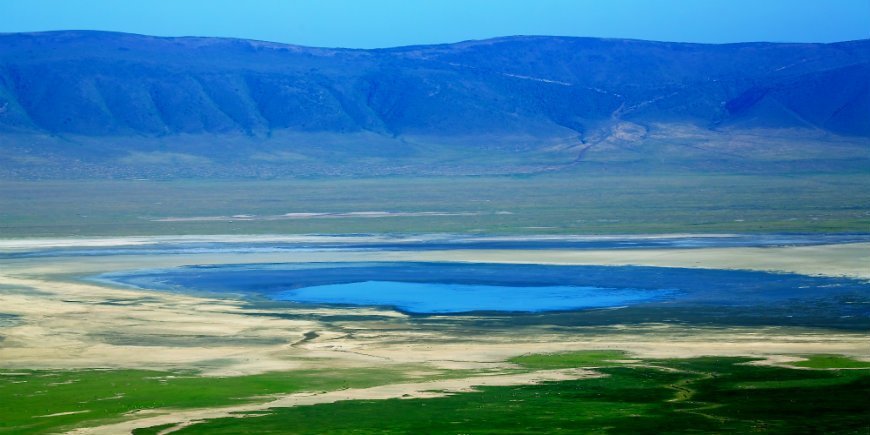
Reconstructing the Crater: Its Formation
The Ngorongoro Crater originated as a volcano that erupted two to three million years ago, believed to have exceeded the height of Mount Kilimanjaro before collapsing inward. The eruption resulted in the largest preserved volcanic caldera globally. The elevated walls and contained ecology create a natural amphitheater that has protected species for millennia. The crater is a prominent feature due to its depth, creating an abundant habitat for various animal species.
How Deep Is the Ngorongoro Crater?
The Ngorongoro Crater has a depth of around 610 meters, equivalent to 2000 feet. This renders it highly different in comparison to other volcanic features globally. The depth, diameter of approximately 19 kilometers (12 miles), and floor area of around 260 square kilometers render it a self-sustaining ecosystem that sustains a significant density of wildlife throughout the year. The precipitous crater walls serve as natural barriers, restricting the animals within the caldera but permitting migratory species to traverse in and out through the ridges.
Why the Depth is Important to Wildlife
The depth of the Ngorongoro Crater is not just a geological characteristic; it is a crucial element in the crater’s biodiversity. The walls retain moisture, fostering a microclimate that supports verdant grasslands, freshwater lakes, wetlands, and woods near the crater’s base.
This ecosystem diversity accommodates about 25,000 animals, including elephants, buffaloes, zebras, and wildebeests. The depth protects the crater bottom from intense highland winds, which can sever objects and create disarray, resulting in a more stable ecosystem for both herbivores and carnivores.
A Sanctuary for Predators
The crater’s predator fauna is very intriguing. The lions, leopards, cheetahs, and hyenas flourish here because to the crater’s depth, which fosters a contained habitat that ensures a stable supply of prey.
The Ngorongoro Crater is referred to as a natural fenceless zoo because its sheer walls create a semi-closed ecology. Visitors to this crater have exceptional opportunities to observe predators during a single game drive, rendering it one of the most gratifying safari experiences in Tanzania.
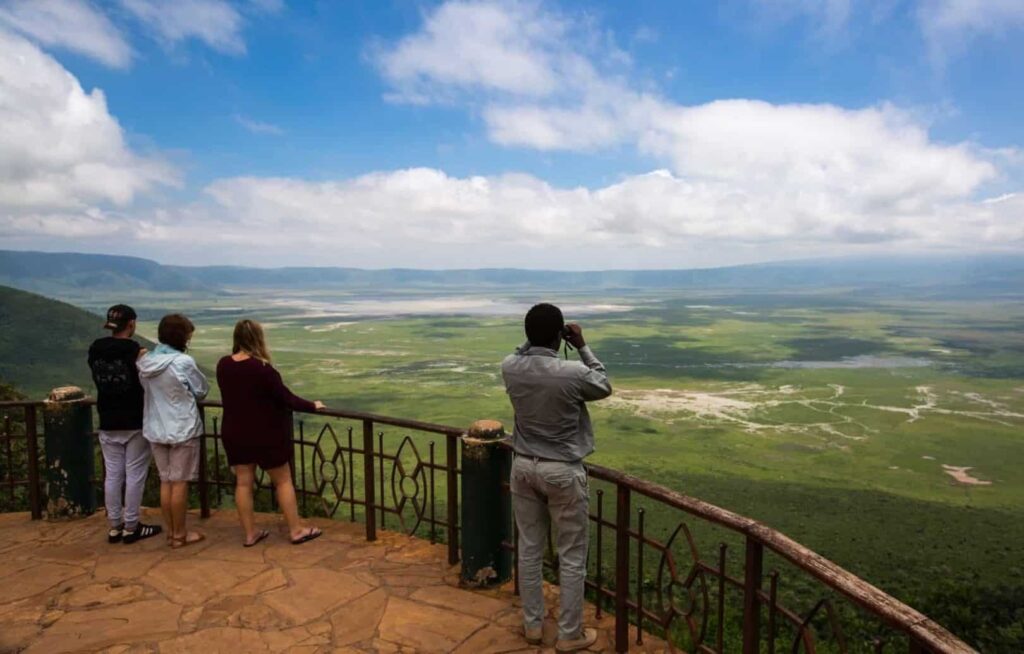
Microclimate and Its Seasonal Fluctuations
The climate of the crater is contingent upon its depth. Although the adjacent Ngorongoro Highlands are typically chilly and misty, the crater bottom may exhibit higher temperatures and increased humidity. The rains and streams down the walls collect water from the tributaries and drain into the shallow alkaline Lake Magadi located on the crater floor, which draws flocks of flamingos. The crater exhibits significant seasonal change, and its depth facilitates the retention of green flora during arid months, so offering optimal animal viewing opportunities year-round.
Human History and Cultural Significance
In addition to its natural marvel, the crater’s depth has influenced human settlement and cultural heritage. The Ngorongoro Conservation Area is populated by the Maasai people, who pasture their cattle on the crater’s rim. The precipitous crater walls separate pastoral regions from the wildlife-abundant basin, balancing human endeavors with conservation efforts. Ancient human settlement is present inside the archaeological sites next to the Olduvai Gorge, thus linking the geological formation’s depth to humanity’s extensive history.
Expedition in the Crater
The Ngorongoro Crater’s walls ascend to 610 meters, and descending them constitutes one of the most unforgettable safari experiences. The shift from the uplands to the lush crater floor and its fauna represents a total transformation of the landscape for the hiker. The depth creates a precipitous, exhilarating plunge, heightening the anticipation of what lies underneath. Safari vehicles navigate cautiously along the inclines, and once reaching the terrain, the abundance of species facilitates remarkable observations within a few hours.
The Distinctiveness of the Ngorongoro Crater
The Ngorongoro Crater is distinctive among Africa’s volcanic landforms due to its size, depth, and preserved environment. The 610-meter depth, providing a natural enclosure, sustains one of the biggest populations of animals in Africa. In contrast to other safari locations where animals may traverse extensive distances during arid seasons, the enclosed aspect of the crater ensures consistent wildlife encounters throughout the year.
Conclusion: We Now Perceive Depth Beyond Numerical Dimensions
What is the depth of the Ngorongoro Crater? The volcano, standing at 610 meters, is the largest preserved caldera globally and one of the most striking safari locales on Earth. Beyond the statistics, there exist profound aspects that cultivate a flourishing ecosystem, protect species from severe conditions, and offer an unparalleled safari experience for its visitors.
The Ngorongoro Crater is an iconic African destination, captivating visitors with the prospect of predator sightings, the chance to observe the Big Five in one day, and the cultural wealth of the nearby Maasai towns. A visit to this natural beauty is essential for any potential traveler to Tanzania.