Ngorongoro Conservation Area
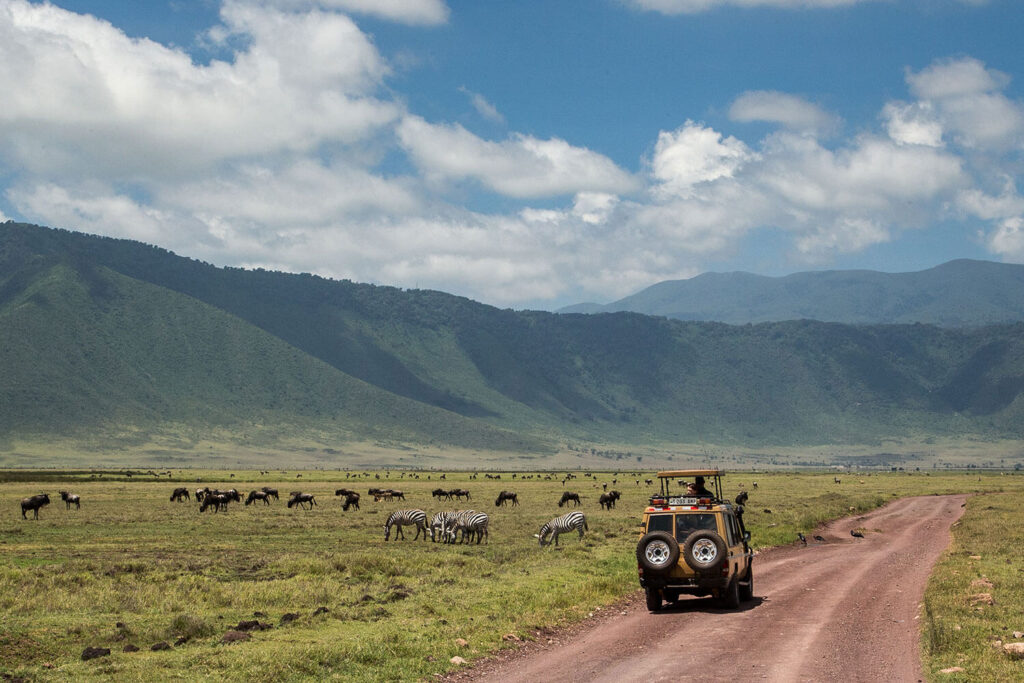
The Ngorongoro Conservation Area (NCA) is a conservation zone and a UNESCO World Heritage Site situated 180 km (110 mi) west of Arusha in Tanzania’s Crater Highlands. The region is called for the Ngorongoro Crater, a huge volcanic caldera located within it. The conservation area is governed by the Ngorongoro Conservation Area Authority, a division of the Tanzanian government, with its limits aligning with those of the Ngorongoro Division in the Arusha Region.
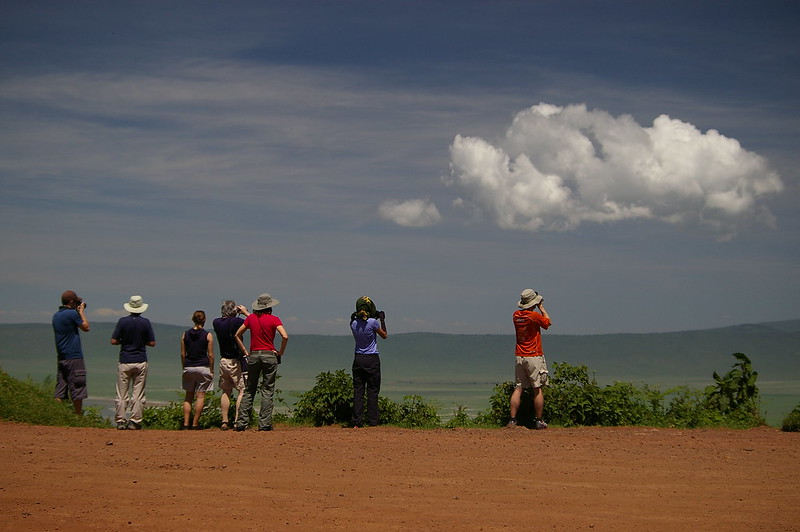
In 2009, it was reported that the governmental authorities recommended reducing the population of the protected area from 65,000 to 25,000. Plans are under consideration for the construction of 14 additional luxury tourist hotels, enabling access to “the unparalleled beauty of one of the world’s most pristine wildlife sanctuaries.” No senior-level posts in the Ngorongoro Conservation Area are now occupied by a member of the native Maasai pastoralists.
Ngorongoro Crater
The primary attribute of the Ngorongoro Conservation Authority is the Ngorongoro Crater, the biggest dormant, undamaged, and unfilled volcanic caldera globally. The crater, resulting from a significant volcanic eruption and subsequent collapse two to three million years ago, is 610 meters (2,000 feet) deep and spans a floor area of 260 square kilometers (100 square miles). Estimates of the ancient volcano’s height range from 4,500 to 5,800 meters (14,800 to 19,000 ft). The altitude of the crater bottom is 1,800 meters (5,900 feet) above sea level. In February 2013, the Crater was designated as one of the Seven Natural Wonders of Africa by Seven Natural Wonders in Arusha, Tanzania.
The crater highlands exposed to the easterly trade winds receive 800 to 1,200 millimeters (31 to 47 inches) of annual precipitation and are predominantly adorned with montane forest. The gently sloped west wall receives only 400 to 600 millimeters (16 to 24 inches) of precipitation and is characterized by grassland and scrub interspersed with Euphorbia bussei trees. The crater bottom primarily consists of open grassland, interspersed with two minor forested regions characterized by Acacia xanthophloea.
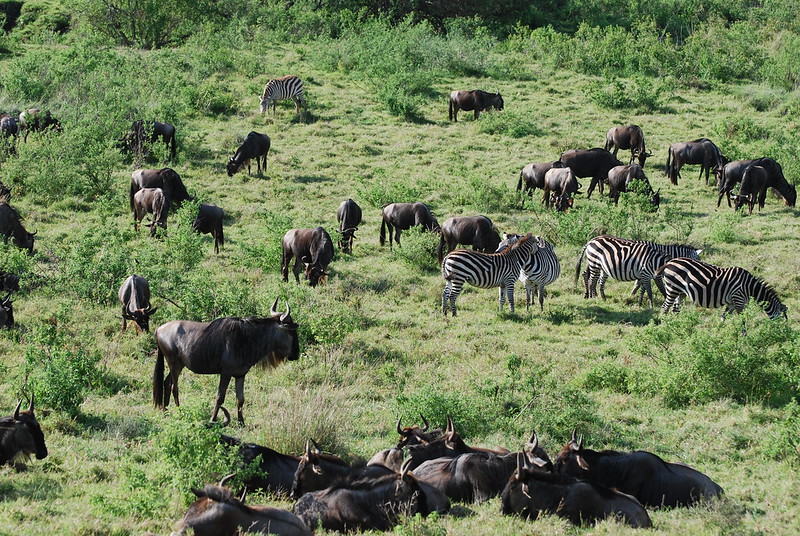
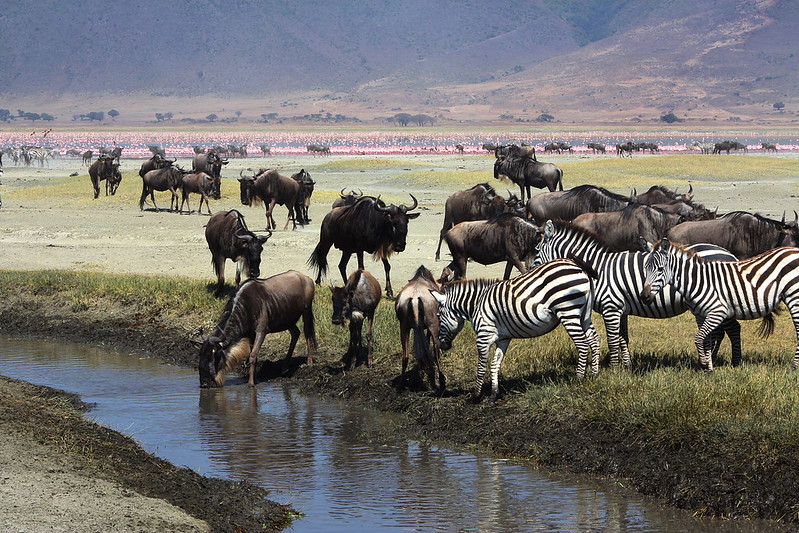
Approximately 25,000 big mammals, predominantly ungulates, inhabit the crater. The crater is home to significant fauna, including the black rhinoceros (Diceros bicornis), whose population decreased from approximately 108 in 1964-66 to between 11 and 14 by 1995, the African buffalo or Cape buffalo (Syncerus caffer), and the hippopotamus (Hippopotamus amphibius). Additionally, numerous additional ungulates exist: the blue wildebeest (Connochaetes taurinus) with an estimated population of 7,000 in 1994, Grant’s zebra (Equus quagga boehmi) at 4,000, the common eland (Taurotragus oryx), and both Grant’s gazelle (Nanger granti) and Thomson’s gazelle (Eudorcas thomsonii) at 3,000. Waterbucks (Kobus ellipsiprymnus) predominantly inhabit areas adjacent to Lerai Forest. Topis (Damaliscus lunatus), oribis (Ourebia oribi), and crocodiles (Crocodylus niloticus) are absent. Impala (Aepyceros melampus) are absent due to the nonexistence of their preferred open forest habitat. Giraffes are also absent, likely due to a deficiency of browse species. The Tanzanian cheetah (Acinonyx jubatus raineyii), East African wild dog (Lycaon pictus lupinus), and African leopard (Panthera pardus pardus) are seldom observed.
Activities in Ngorongoro
1. Wildlife Safari Adventures
Avian species can be observed among the diverse tree varieties on game drives as you descend into the Ngorongoro Crater. A diverse array of creatures is observable on the crater bottom.
Seasonally, flocks of pink flamingos are observable along the beaches of Lake Magadi. Hippopotamuses are observable in the adjacent marshland. The majority of the native fauna inhabits the broad grasslands situated north of the Crater.
2. Walking safaris
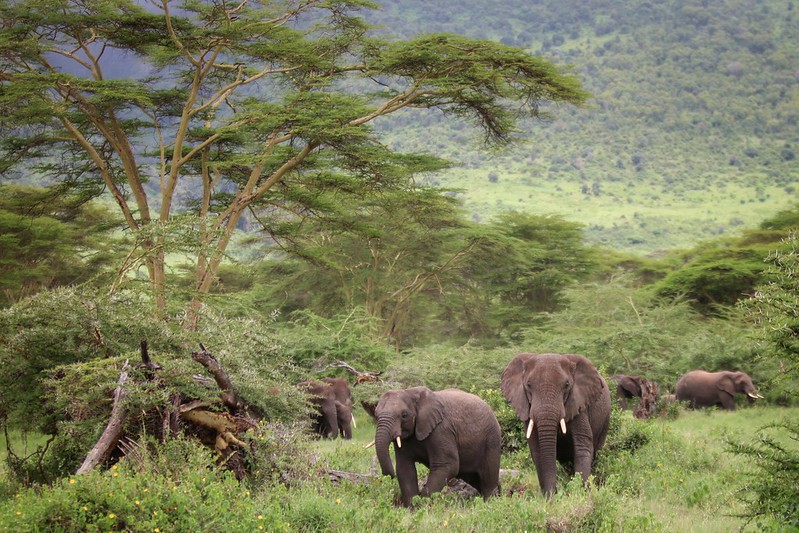
Walking safaris offer an intimate experience with the natural surroundings. This excursion is conducted on foot with a ranger guide.
Diverse wildlife species are observable while traversing the Ngorongoro Conservation Area. These excursions can also occur along the rim of the Ngorongoro Crater, where fauna such as elephants may be observed in the adjacent forest.
3. Bird watching
The Ngorongoro Conservation Area hosts more than 550 avian species. These are observable during game drives and walking safaris.
The highland woodland hosts the white-eyed slaty flycatcher and the Livingstone turaco. Flamingos are observable surrounding Lake Magadi, contingent upon the season. The area is also home to ostriches, starlings, black kites, grey-crowned cranes, African spoonbills, and various other avian species.
4. Visit to Oldupai
You may embark on a guided excursion down the gorge or search for ancient human footprints in Laetoli. These footprints were found on volcanic rock and are over 3 million years old.
A modest museum is accessible to the public, showcasing unearthed remains and objects for visitors to observe. Authentic replicas of the most notable findings are readily accessible, and guided tours of the locations are available with informed guides.
Cultural tours
Cultural visits encompass contact with the Maasai, tours of traditional Maasai homesteads, and attendance at traditional dance performances, among other things.
Tourists may opt to visit the Hadzabe tribe. The Hadzabe are indigenous individuals who continue to engage in hunting and gathering practices. One can acquire knowledge of their culture by participating in a tour of their secluded habitats.
Ngorongoro Areas of Interest
1. The Ngorongoro Crater
The Ngorongoro Crater is an expansive volcanic caldera. The dimensions are around 20 kilometers in diameter, 600 kilometers in depth, 300 square kilometers in area, and 1,800 meters in elevation above sea level.
The crater was created approximately three million years ago due to the collapse of a substantial volcano. The volcano stood at an elevation of 4587 meters above sea level prior to its collapse. More than 500 avian species and several mammals, including the Big Five, inhabit the crater.
Lake Magadi
Lake Magadi is a tiny soda lake situated southwest of the Ngorongoro Conservation Area. It is frequently populated by thousands of flamingos, predominantly smaller flamingos.
The lakeshore is an excellent location to observe golden jackals, which frequently prey on flamingos. Additional animals that may be observed are the Lion, Rhinoceros, Hippopotamus, Eland, and Grant’s Gazelle.
3. Olduvai Gorge
Olduvai Gorge is an archeological site located around 40 kilometers northwest of the Ngorongoro Crater. The Olduvai Gorge measures around 50 kilometers in length and reaches depths of up to 90 meters. Dr. Louis Leakey and his spouse, Mary Leakey, became Olduvai renowned through their archaeological excavations.
Evidence of human evolution was found in the region. Stone implements and fossils were among the findings at the site. A museum is available for tourists to view artifacts and get knowledge regarding the history of human evolution.
Wildlife and Vegetation in Ngorongoro
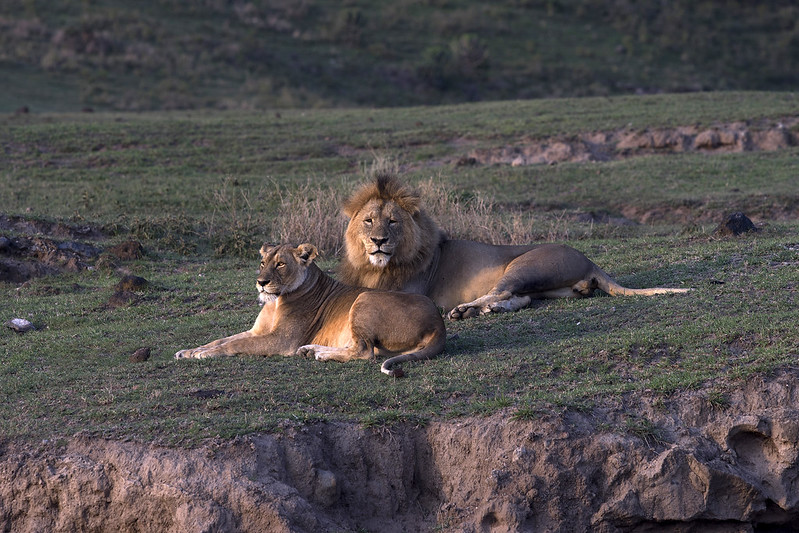
The Ngorongoro Conservation Area hosts more than 115 distinct animal species. The Ngorongoro Conservation Area is home to several carnivores, including lions, cheetahs, hyenas, leopards, jackals, serval cats, and endangered wild hunting dogs.
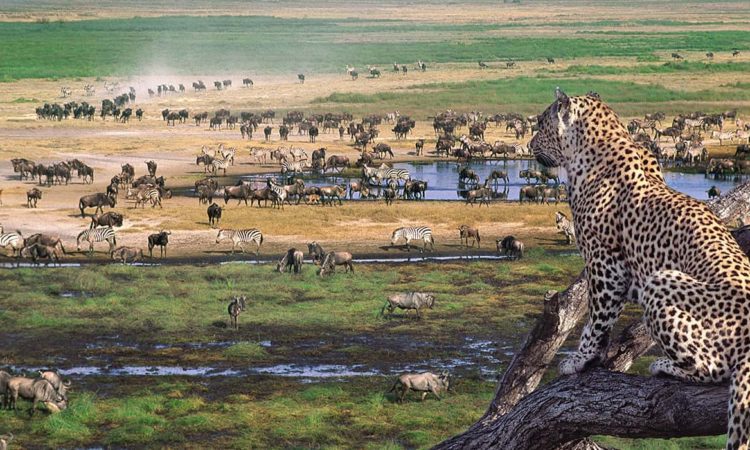
The crater hosts elephants, elands, hartebeests, zebras, wildebeests, buffalo, waterbucks, warthogs, kudus, and endangered rhinos. Hippopotamuses inhabit the crater’s enduring freshwater ponds and marshes. Giraffes inhabit the area surrounding Lake Ndutu, where acacia trees thrive. The Conservation Area hosts more than 550 avian species.
Some are inhabitants, while others are migratory. Numerous lesser flamingos and several aquatic avifauna inhabit Lake Magadi. These birds are also observable in the region of Lake Ndutu and Empakaai Crater Lake.
The woodlands of Ngorongoro are abundant with avian species, including turacos and hornbills. Raptors, including the goshawk and harrier, are prevalent in the plains of the Conservation Area.
The best time to visit Ngorongoro
The arid season occurs from December to March and from June to September. This period offers optimal conditions for wildlife observation because to the reduced height of the grasses.
Animals gather at the limited remaining waterholes, enabling tourists to observe most of them in a one spot.
Accessing Ngorongoro
The Ngorongoro Conservation Area is around 185 kilometers from Arusha and around 230 kilometers from Kilimanjaro International Airport. The location is accessible by car in around 3 hours from Arusha and around 5 hours from Kilimanjaro International Airport.
Visitors may also utilize a chartered flight from Arusha or Kilimanjaro International Airport to Lake Manyara Airstrip, followed by a drive to Ngorongoro.
Accommodation options in Ngorongoro
Visitors to the Ngorongoro Crater may select from an array of accommodation alternatives. You may choose to reside in a cheap, mid-range, or luxury accommodation.
Accommodations at a hotel on the crater’s rim or in the adjacent town of Karatu are viable alternatives. Camping is permitted in specified locations including the Ngorongoro crater rim, Ndutu, Lemala, and Empakaai crater rim.