How to get to Amboseli National Park
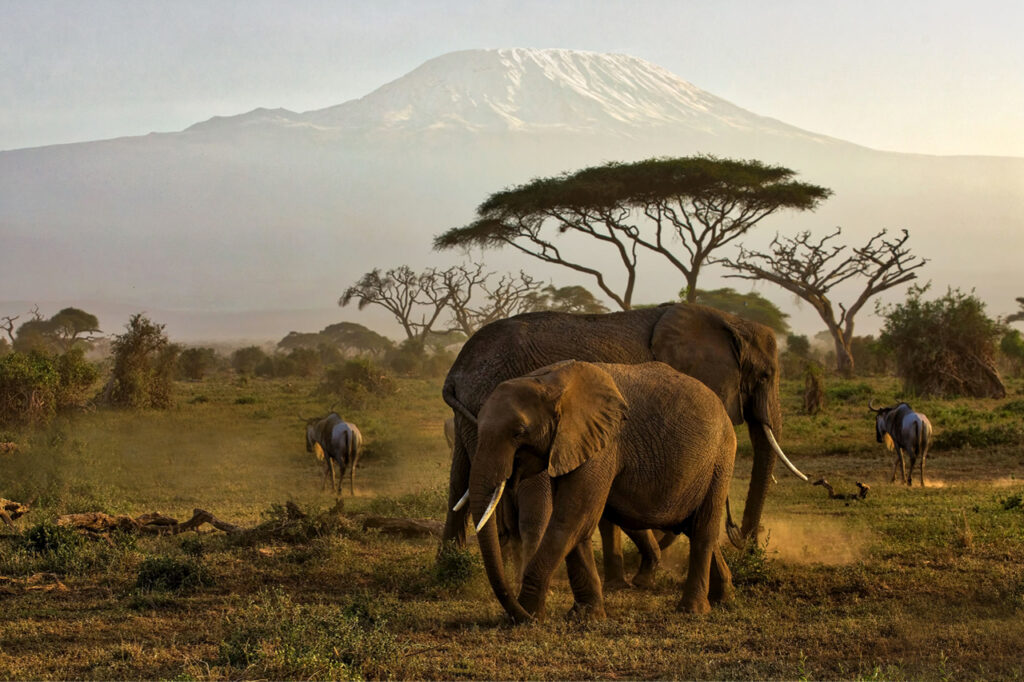
How to get to Amboseli National Park: Amboseli National Park is a remarkable national park situated in Southern Kenya, within Kajiado County. The park encompasses an area of 392 square kilometers and is dominated by the snow-capped peak of Mount Kilimanjaro, the highest mountain on the African continent. The park extends along the Kenya-Tanzania border, characterized by expansive savannah grasslands, dense acacia woodlands, and the desiccated basin of Lake Amboseli.
Amboseli derives its name from the Maasai term “Empusel,” which translates to a salty, dusty location.
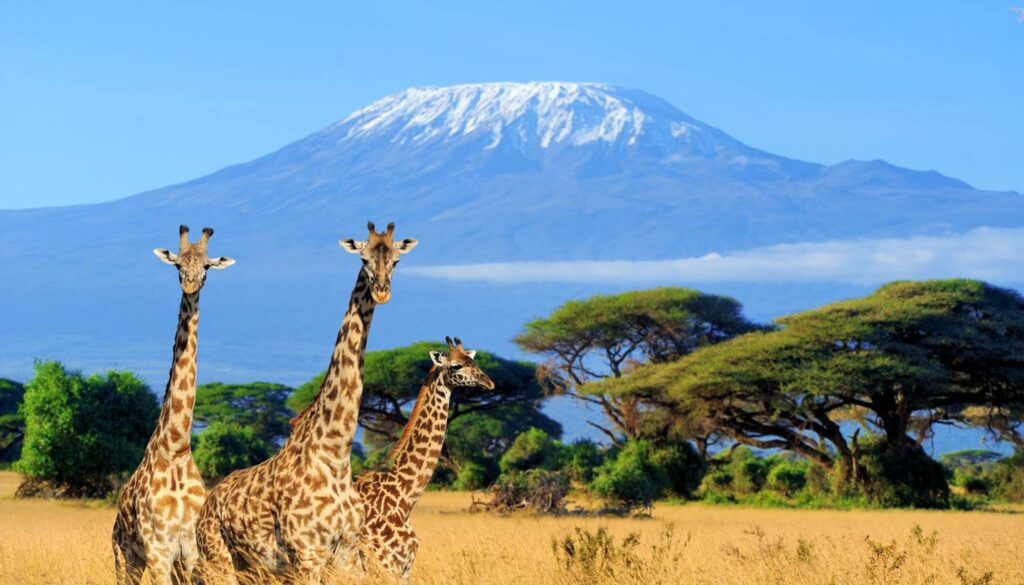
The snow-capped summit of Mount Kilimanjaro provides a stunning background for safari photography. The melting snow from the mountain nourishes the distinctive marsh system in the park, serving as a consistent water source in an area characterized by sparse rainfall. These marshes are excellent locations for observing wildlife and avifauna, rendering Amboseli National Park the second-most frequented national park for wildlife observation and one of the premier destinations to view elephants in Africa.
Activities in Amboseli National Park
The primary tourist attraction in Amboseli National Park is the substantial herds of elephants, the largest terrestrial mammals on Earth, typically exceeding 100 individuals, ranging from sagacious matriarchs to diminutive calves still enveloped in coarse orange fur.
Amboseli National Park features scant foliage, facilitating the easy observation of elephants, known as Amboseli’s iconic tuskers because to their exceptionally long tusks. Amboseli National Park is home to the renowned Amboseli Trust for Elephants, which has been researching elephant populations since 1972.
Amboseli National Park is home to elephants, buffaloes, lions, and various antelopes, including impalas, Thomson’s gazelles, wildebeests, Grant’s zebras, and the endangered Maasai giraffe. Amboseli is an excellent location for observing predators, including the rarer carnivores like the cheetah and spotted hyena.
Amboseli National Park is an excellent birdwatching destination in Kenya, featuring over 400 distinct avian species, including 47 varieties of raptors. The avifauna of Amboseli National Park comprises the African swamphen, Common redshank, Dickinson’s kestrel, Eurasian thick-knee, Greater flamingo, Hartlaub’s bustard, Lesser flamingo, Long-toed lapwing, Pangani longclaw, Rufous chatterer, Rufous-bellied heron, Spike-heeled lark, Steel-blue whydah, Taveta golden weaver, Von der Decken’s hornbill, and Yellow-necked spurfowl, among others.
Amboseli National Park encompasses a remarkable human history, accessible through visits to the Maasai settlements located along the park’s periphery.
Safari In Amboseli National Park
Game viewing is the primary activity in Amboseli National Park, available through guided game drives or self-drive alternatives.
Tour providers organize guided game drives, and in this instance, All Tanzania Safaris (info@alltanzaniasafaris.com) is the optimal choice. Self-drives are conducted by an individual in their personal vehicle.
Birding safaris or specialized birding excursions in Amboseli National Park are another remarkable activity to engage in within the park. This excursion is ideal for those fascinated by the avifauna of Amboseli and may be conducted either by vehicle or on foot, featuring species such as lesser flamingoes, lesser kestrels, blue-cheeked bee-eaters, and the endangered Malagasy pond heron, among others.
Accommodation Options in Amboseli National Park
Amboseli National Park offers a diverse array of lodging options to accommodate the financial constraints of all travelers, divided into budget, midrange, and luxury options. Self-catering band as provide the most economical lodging option in Amboseli National Park, managed by Kenya Wildlife Services. For guests seeking a more opulent experience, private lodges within the park are available.
These provisions encompass
Ol Tukai Lodge
Amboseli Serena Safari Lodge
Kilimanjaro Guest House
Simba Cottages
Chui Cottages
Tortilis Camp, Tawi Lodge
AA Amboseli Lodge
How to Get to Amboseli National Park
The most convenient access to Amboseli National Park is by flights to Amboseli Airstrip, with chartered scheduled domestic services provided by airlines including Fly540, Mombasa Air Safari, and Safarilink Aviation from Wilson Airport. From Wilson Airport, the flight duration to Amboseli airstrip is around 40 minutes; certain safari lodges within Amboseli National Park possess their own private airstrips.
When traveling by road from Nairobi city to Amboseli National Park, you have two alternatives. Travel south on the A104 to Namanga, then proceed east on the C103 until you arrive at Meshanani Gate, approximately 150 miles away. One may also utilize the A109 Southeast to Emali before proceeding south on the C102 to Iremito Gate (134 miles).
Guidelines for Visiting Amboseli National Park
As a visitor, here are several recommendations to enhance your safari experience in Amboseli National Park, accompanied by the Comprehensive Guide to Amboseli National Park.
Amboseli National Park operates daily from 6:00 AM until 7:00 PM, including public holidays.
Amboseli National Park is located near the equator, resulting in minimal variation in annual temperature; it generally experiences hot conditions, with temperatures ranging from 80 to 86 degrees Fahrenheit (27 to 30 degrees Celsius). In Amboseli National Park, temperatures significantly decrease at night; therefore, it is advisable to wear warm clothing for nighttime and early morning game drives.
Amboseli National Park undergoes two rainy seasons: the long rains from March to May and the brief rains from November to December.
The optimal period to visit Amboseli National Park is during the extended dry season from June to September, when animals gather near the park’s water sources, making them easily observable as they drink and bathe in the mud.
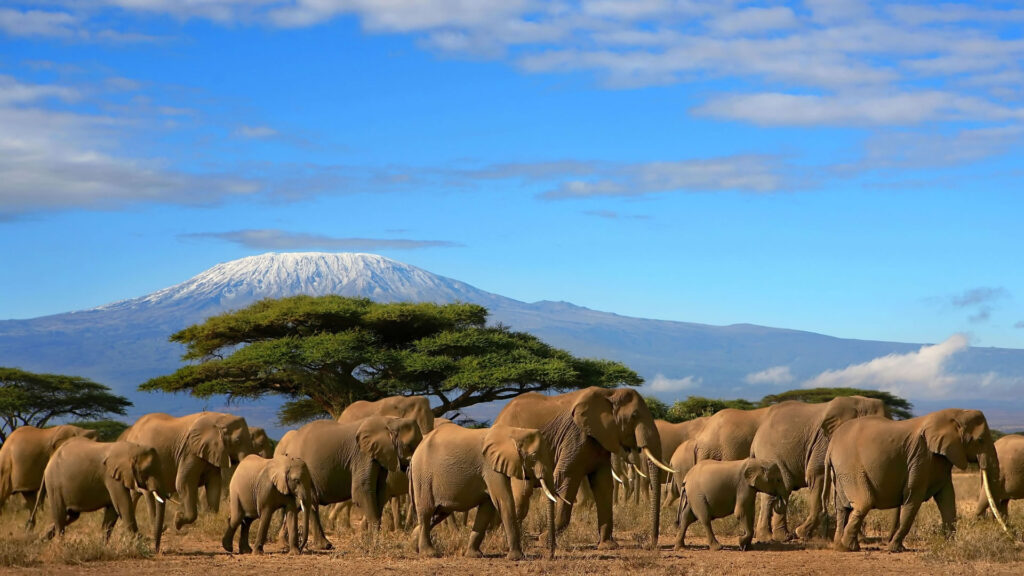
Visiting Amboseli National Park during the rainy season is generally not advisable; nonetheless, it offers certain advantages, such as reduced hotel costs and a verdant scenery characterized by luxuriant flora. Mount Kilimanjaro, with its snow-capped top, is more prominent, and several bird species congregate in Lake Amboseli.
Single-use plastics are prohibited in all Kenyan national parks and conservation areas, including Amboseli National Park.
Prior to visiting Amboseli as a tourist, consult your physician regarding anti-malaria medication and any necessary vaccines for safe travel to Kenya.