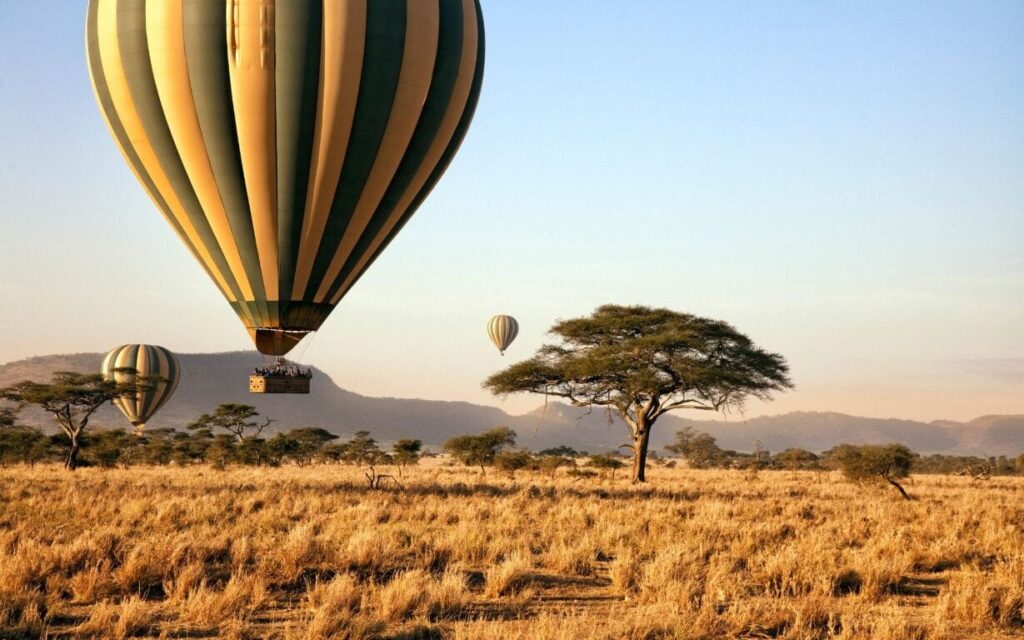
Weather Around Serengeti National Park
Weather Around Serengeti National Park, Serengeti National Park, located in northern Tanzania, is renowned for its diverse wildlife, particularly the Great Wildebeest Migration, and features a unique weather pattern that influences the park’s ecosystems. Understanding the climatic conditions of the Serengeti region is essential for safari planning, determining the optimal season for visitation and the anticipated wildlife behaviors. The Serengeti exhibits a more tropical climate relative to other global places, characterized by four seasons, including two rainy and two dry seasons each year.
The Tranquility of the Climate in the Serengeti.
The Serengeti is situated near the equator, with an elevation ranging from 1,140 to 2,000 meters (3,740 to 6,560 feet) above sea level. This height maintains acceptable temperatures year-round, despite its tropical location.
Daytime temperatures typically range from 24°C to 30°C (75°F to 86°F), while nighttime temperatures can drop to 14°C (57°F) or lower, especially during the dry season.
The Serengeti receives an average yearly rainfall of 800-1200 mm (31-47 inches), though this amount varies by location and season.
The park experiences two wet seasons, namely the short rains and the long rains, as well as two dry seasons. These cycles are crucial for animal locomotion, particularly in the movement of wildebeests.
Seasonal Meteorological Trends in the Serengeti.
Arid Season (June to October)
Climate: Clear days, arid, temperate days, and cool evenings. This interval experiences minimal precipitation.
The weather is sunny, with an average daytime temperature of 25°C (77°F), although nighttime temperatures may drop to 14°C (57°F) or lower, especially in July and August.
Impact on wildlife: Water sources are depleted, causing animals to congregate around rivers and waterholes, making them more conspicuous. Deforestation enhances visibility for game drives.
The safari season in Tanzania is currently at its peak. The roads are arid and unobstructed, and the weather is ideal for photography.
Short Rains (November to December)
Afternoon showers are common, however they are often light and not prolonged. The topography is enhanced with vegetation.
Weather: Days are warm with temperatures around 26°C (79°F), while nights are relatively mild.
The proliferation of wildlife correlates with the availability of water sources. The wildebeest migration commences, with the herds proceeding to the southern region of the Serengeti.
The volume of tourists was down compared to the peak season. Notwithstanding the potential slipperiness of certain routes owing to precipitation, the wildlife observation remains excellent.
Prolonged Rainfall Season (March to May)
The climate is marked by a rainy season, typically characterized by afternoon thunderstorms. The sky may be overcast, and certain areas may be inaccessible due to muddy roads.
Climate: Daytime temperatures average 27°C (81°F), while nighttime temperatures are 17°C (63°F).
Wildlife Impact: The calving season of the wildebeest occurs in the southern Serengeti and Ndutu from late January to March. Wildlife observation remains remarkable even in wet seasons, as several predators are present throughout that time.
The safari experience is characterized by a lack of congestion, as visitor numbers are comparatively low. Nonetheless, road conditions may be challenging, and several lodges are closed.
Transitional Phases
January-February: The climate during this period is typically arid and temperate, situated between the short and long rainy seasons. During this period, wildebeests give birth, resulting in hundreds of newborns visible over the southern region of the Serengeti.
Late May to early June: Precipitation diminishes, resulting in verdant landscapes. The migration season commences with an extensive journey undertaken by the wildebeest towards the north.
The Climatic Variations in the Serengeti.
The Serengeti has an extensive expanse of 14,750 square kilometers (5,700 square miles), with varying meteorological conditions across its regions.
Southern Serengeti: More level and warmer. The calving season occurs from December to March.
The Central Serengeti (Seronera) experiences moderate climatic conditions year-round, making it an ideal destination for safaris at any time.
The Western Serengeti, situated nearer to Lake Victoria, experiences greater precipitation than other regions. In April and May, substantial precipitation is prevalent in this region.
The Northern Serengeti experiences a slightly milder climate because of its height. It is observable from July to October at the significant crossings of the Mara River.
The Impact of Weather on the Wildebeest Migration.
The climatic conditions and precipitation in the Serengeti are intrinsically linked to the Great Migration, which involves about 1.5 million wildebeest alongside hundreds of thousands of zebras and gazelles.
From December to March, the southern Serengeti experiences its calving season, attributed to the emergence of fresh grazing following the brief rains.
April to May: Precipitation compels cattle to migrate northwest of the Grumeti River.
June-July: The onset of the dry season prompts herds to migrate into the middle and western Serengeti.
From July to October, river crossings to Kenya during the big migration take place in the North Serengeti, coinciding with the dry season.
In November, the herds migrate southward in response to the little rainfall.
The climate of the Serengeti serves as a natural indicator for migration.
Weather, Packing, and Preparation for the Serengeti.
Customers are anticipated to travel with their packs in accordance with the season and weather conditions:
- Arid Season (June-October):
- These mornings and evenings are exceptionally warm.
- Attire suitable for daytime wear.
- A hat, sunglasses, and sunscreen during sunny weather.
- Rainy Season (March-May): November-December:
- Waterproof electronic bags.
- Resilient footwear for the wet season.
- Essential Items for All Seasons:
- Cameras and dustproof binoculars.
- Insect repellant (during the rainy season).
- There exist strata with differing temperatures.
- Optimal Safari Season, contingent upon meteorological conditions.
- General wildlife viewing occurs from June to October during the dry season.
- Migration Calving occurs from January to March in the southern Serengeti.
- During River Crossings: July to October (northern Serengeti).
- Fewer individuals and diminished costs: April to May (green season).
- Each season is distinct, and the optimal timing is contingent upon personal preference.
Final Assessment
The climate of Serengeti National Park is a crucial determinant of the environment, wildlife movement patterns, and safari experiences. The park possesses a tropical yet temperate environment, rendering it a consistently gratifying destination throughout the year. The dry seasons provide clear sky and facilitate wildlife observation, while the wet seasons yield verdant landscapes and dramatic wildlife spectacles, like as the wildebeest calving.