Seronera Weather
Seronera weather has a predominantly mild and arid season from May to August; a dry and warmer period in September and October and a wet and hot season from November to April.
Temperatures in the Serengeti
Contrary to the common perception that Africa is predominantly a scorching region, the climate of the Serengeti is, in fact, quite agreeable and temperate. It rarely becomes excessively hot, and temperatures decrease at night and in the early morning. Seasonal variations occur in minimum and maximum temperatures, with the wet season exhibiting the highest warmth. The Seronera region seldom surpasses 37 °C during a warm afternoon in the wet season and seldom falls below 13 °C on a chilly early morning in the dry season.
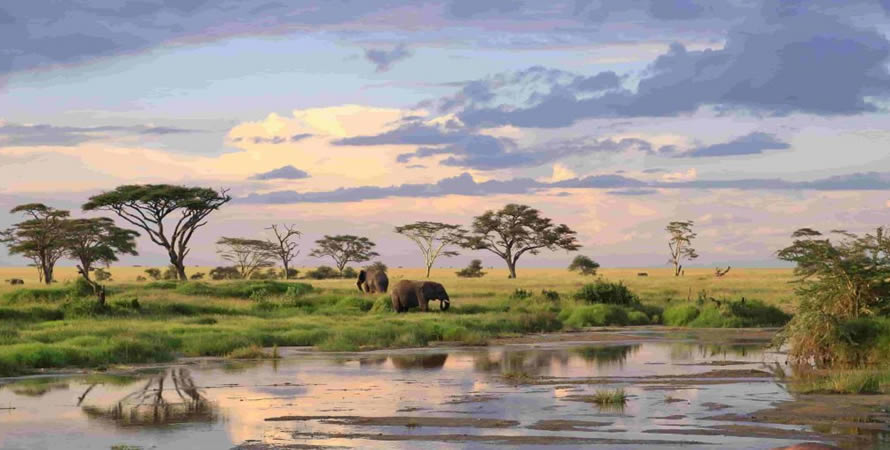
The mean maximum daily temperature varies with altitude, ranging from 15°C in the vicinity of the crater highlands to approximately 30°C near Lake Victoria. Due to its elevation, Serengeti National Park functions as a ‘cool island’ within a significantly warmer area.
Rainfall intervals in the Serengeti
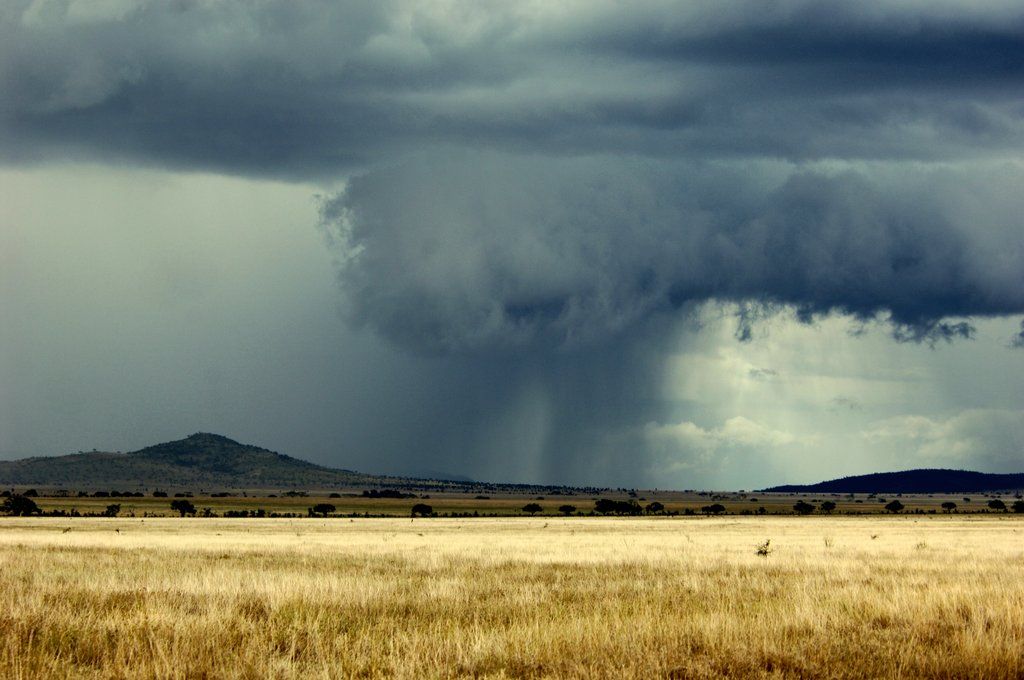
Serengeti National Park experiences two distinct rainy seasons. The brief rains from November to December offer the initial respite from the dry season. The rains are erratic and are improbable to disrupt your safari. The long rains succeed the short rains from March to May, which are the months of peak precipitation. It rarely rains all day; nevertheless, take note that it does rain on the majority of days. Consequently, the terrain becomes verdant, leading to this season being commonly referred to as the ‘green season.’ Occasionally, the rains coalesce into a protracted duration, especially in the northern regions. The short rains may completely fail, particularly in the southeastern region of the Serengeti.
Rainfall gradient
A rainfall gradient exists from the arid southeastern plains (400 mm annually) to the significantly wetter northwest near the Kenyan border and the Masai Mara (up to 1,200 mm annually). The diminished precipitation on the Serengeti plains results from the rain shadow effect of the Ngorongoro Crater Area and the Meru-Kilimanjaro mountain range. Dominant south-easterly winds laden with moisture from the Indian Ocean are compelled to ascend over these hills. As the temperature decreases, moisture condenses, resulting in precipitation. Nevertheless, shifting winds can transport moisture inland from Lake Victoria, counteracting this phenomenon and creating this rainfall gradient.
Month to month average maximum and minimum temperatures
| JAN | FEB | MAR | APR | MAY | JUN | JUL | AUG | SEP | OCT | NOV | DEC | |
| Max °C | 29 | 29 | 29 | 28 | 27 | 26 | 26 | 27 | 28 | 28 | 28 | 28 |
| Min °C | 26 | 16 | 16 | 16 | 15 | 15 | 14 | 15 | 15 | 16 | 16 | 16 |
Month to month average rainfall in mm
| JAN | FEB | MAR | APR | MAY | JUN | JUL | AUG | SEP | OCT | NOV | DEC | |
| 80 | 100 | 135 | 160 | 90 | 25 | 15 | 30 | 60 | 70 | 115 | 105 |